
ARUS makes the leap to hydrogen and prepares to lead the energy revolution in Formula Student
ARUS makes the leap to hydrogen and prepares to lead the energy revolution in Formula Student
The University of Seville team is beginning its transition to hydrogen as a new energy vector, with the goal of becoming the first in Spain to compete in this category.
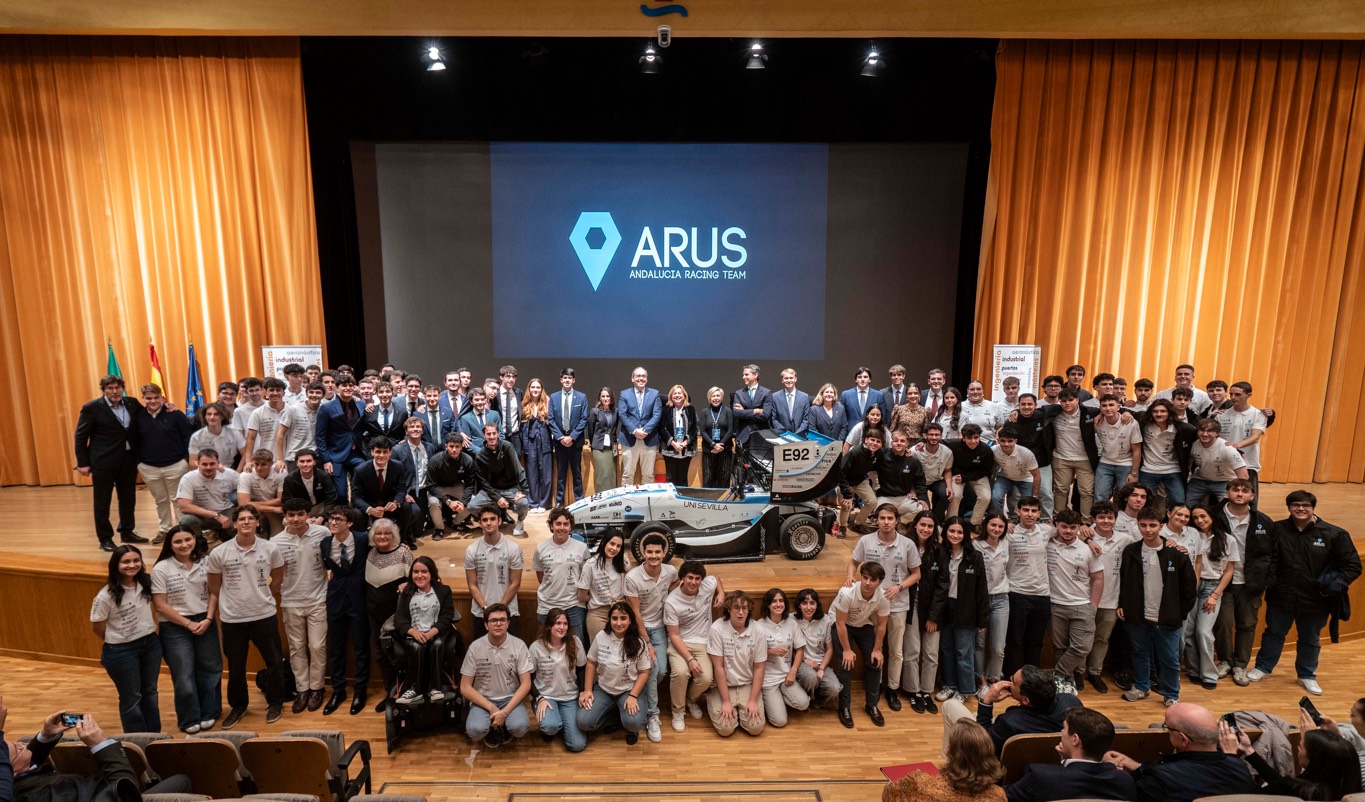
The Higher Technical School of Engineering (ETSi) at the University of Seville hosted the closing event for the 2024-2025 season of the Andalucía Racing Team (ARUS), the University of Seville's Formula Student team, which is based at the School. This event served not only as a farewell to the ART-25D race car, but also as the starting point for the team's most ambitious technological transformation to date: the leap to hydrogen as a new energy source.
A strategic commitment supported by the ETSi and its research ecosystem
Under the slogan "What now?", ARUS officially announced the start of its two-year plan for the development of its future hydrogen vehicle. This new phase is closely linked to the research activity of the ETSI (School of Engineering), where in recent years numerous groups have led nationally and internationally renowned projects in the fields of hydrogen, energy conversion, and fuel cell technologies.
Thanks to this close connection with scientific activity, students receive direct support from professors and researchers specializing in chemical engineering, materials science, electronics, mechanics, energy, and control engineering. The development of the new vehicle itself will benefit from these advancements, integrating applied knowledge of hydrogen storage, power systems, energy modeling, thermal management, safety, and new composite materials. This synergy reinforces the ETSi's commitment as a hub for innovation, technology transfer, and practical training for the engineers of the future.
Farewell to ART-25D and assessment of a decisive year
The event highlighted the significance of the ART-25D, a single-seater that has marked a turning point in ARUS's history. Among the achievements this season, the development of a carbon fiber monocoque chassis stands out, the result of collaborative work between students and research groups specializing in advanced materials at the ETSi (School of Engineering).
The team also presented advancements in the wheel system, which incorporates all-wheel drive with a motor in each wheel. This architecture, supported by faculty collaboration and research experience in vehicle dynamics and mechanical design, significantly improved track performance. Complementing this development, the high-voltage battery—designed entirely by the team with expert advice from the School—has been key to supporting the high demands of the 4WD system.
All electronic and control systems, from power modules to safety circuits, have been developed by ARUS in collaboration with faculty from areas related to electronics, telecommunications and systems engineering, consolidating a learning model based on real advanced engineering projects.
A season of international hits
The event also celebrated the results achieved in the summer competitions: Formula Student Spain (Montmeló), Formula Student Netherlands (TT Assen), and Formula Student Germany (Hockenheimring), where ARUS once again demonstrated its competitive growth. The team secured two podium finishes in the Spanish event and completed a test in autonomous mode for the first time in Germany, a historic achievement that underscores the potential of the educational model and the multidisciplinary collaboration between students and researchers.


