
Arachne, finalist at the Apollo Awards 2025
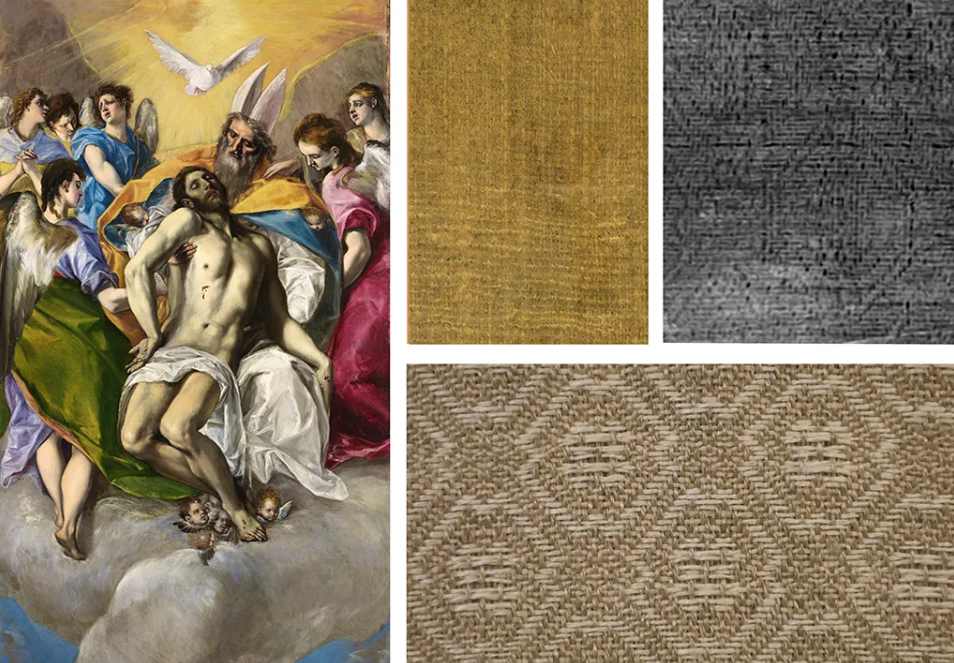
Aracne, the tool developed by ETSi and the Prado Museum for analyzing canvases, is a finalist in the "Digital Innovation of the Year" category of the 2025 Apollo Awards.
The Aracne project —developed by the Signal Theory and Communications research group at the Higher Technical School of Engineering of the University of Seville and the Prado National Museum—has been selected as a finalist in the Digital Innovation of the Year of the 2025 Apollo Awards, one of the most prestigious international awards in the art world, which annually recognizes the most influential achievements in the field of visual arts. This nomination highlights the international impact of a tool that has transformed the scientific study of painting supports.
Aracne allows for the automatic characterization of painting canvases using high-resolution images and X-rays, helping to date, attribute, and relate works with unprecedented precision and objectivity in easel painting. The Prado Museum has made the application publicly available through open access, facilitating its use by institutions and specialists worldwide.
Aracne is the result of a decade of research and collaboration between the Prado Museum and the Higher Technical School of Engineering at the University of Seville. The software applies frequency analysis to images of the fabric to automatically count the threads that make up a canvas, regardless of the use or origin of the cloth, allowing for the comparison of textiles, the study of relining, and the detection of warp and weft matches between works.
The nomination for the 2025 Apollo Awards recognizes projects that provide innovative digital solutions to the field of art and heritage. In its review of the category, Apollo highlights that Aracne has already contributed to significant research findings—for example, in the dating and attribution of artworks—and cites specific cases in which fabric analysis has allowed for revisions to chronologies and attributions, such as the finding that Rubens painted his copy of Titian's The Rape of Europa in Madrid in 1628-29, rather than upon his return to Antwerp, or that The Artillery General, traditionally attributed to Francisco Rizzi, was later recognized as the work of Herrera the Younger.
Since its release as an Open Access tool by the Prado Museum, Aracne has been available to researchers and professionals who wish to apply its algorithms to high-resolution images or X-rays. The tool is the result of a reproducible methodology that facilitates comparisons between collections and provides objective data that complements the traditional analysis of technicians and art historians.
The nomination for the Apollo Awards reflects the momentum with which cultural institutions are integrating technology to expand knowledge, conservation, and public access to their collections. Aracne exemplifies how collaboration between museums and universities can produce open solutions that benefit both academic research and heritage preservation.
About the Apollo Awards
The Apollo Awards, presented by the prestigious international art magazine Apollo, are an annual celebration of outstanding achievements in the art world. They recognize artists, institutions, and projects that have had a significant impact on the visual arts internationally. The Digital Innovation of the Year category recognizes initiatives that use technology to transform how we interact with art and cultural heritage. Previous recipients include Smartify, the app that allows users to scan artworks in museums; Art UK, for digitizing thousands of public works in the United Kingdom; and the Factum Foundation, for its innovations in 3D documentation of fragile artifacts such as the tomb of Tutankhamun.


