
Biomimicry for the Development of Bipolar Plates for PEM Type Fuel Cells (BioPEM)
Date
-
Brief overview
Proton exchange membrane fuel cells (PEMFCs) are energy devices that directly convert the chemical energy of fuels such as hydrogen into useful work with negligible environmental impact and high efficiency. The geometry of the bipolar plate channel has a considerable impact on fuel cell performance.
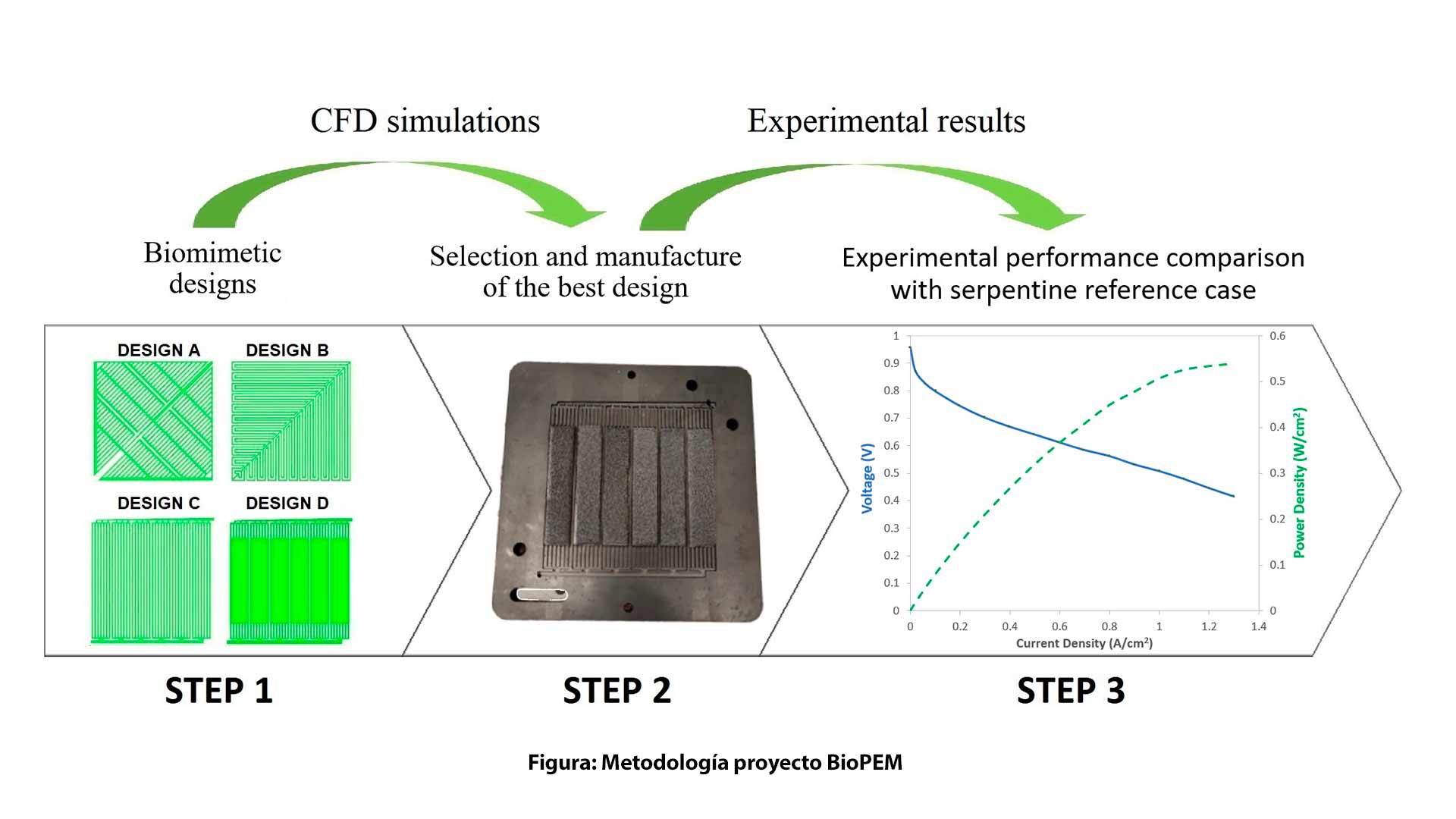
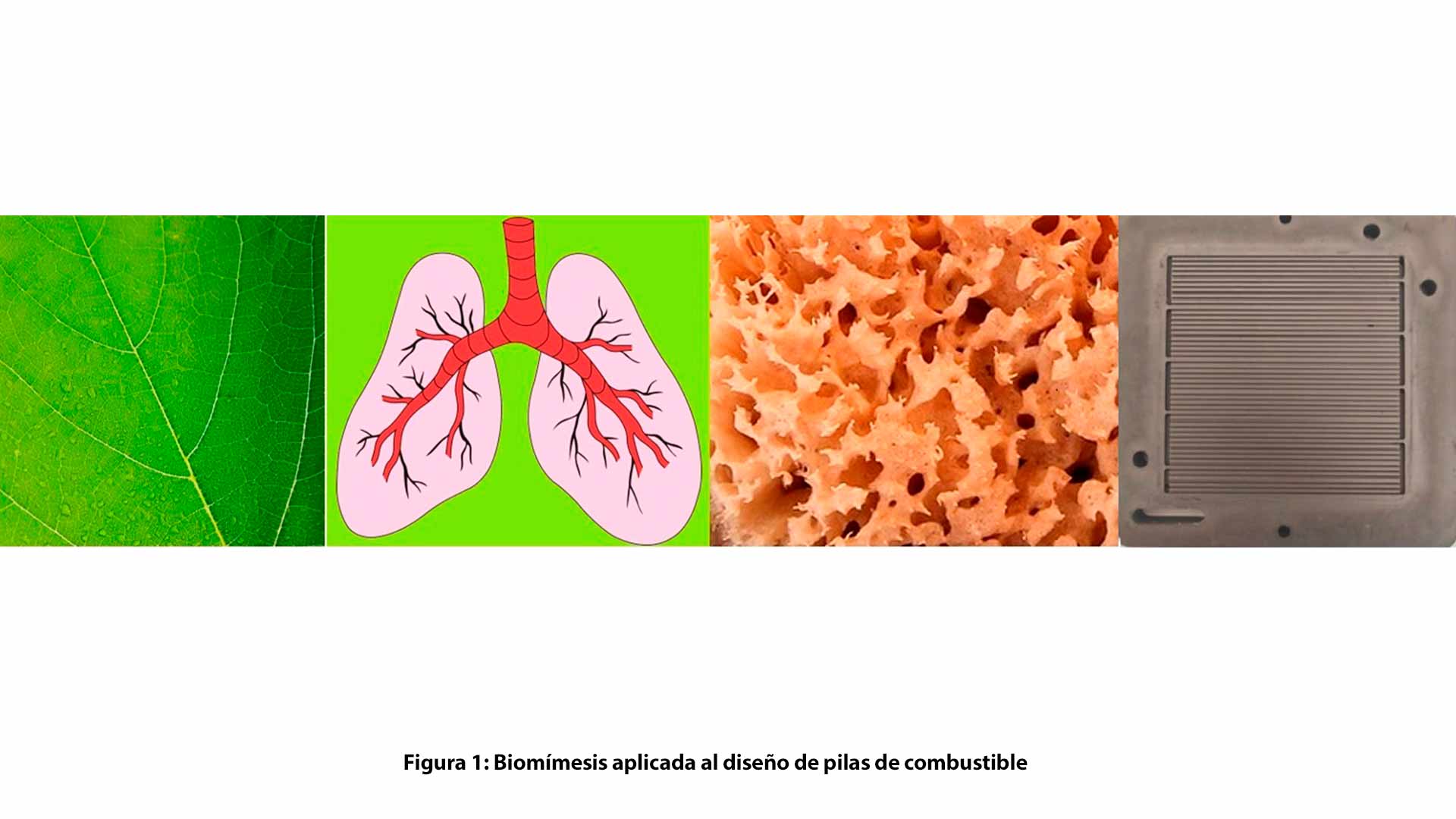
Bipolar plate designs based on nature-inspired structures, such as leaves, lungs, or sponges, have been successfully explored to date, but have not yet reached their full potential. This project investigates novel biomimetic designs through three distinct phases.
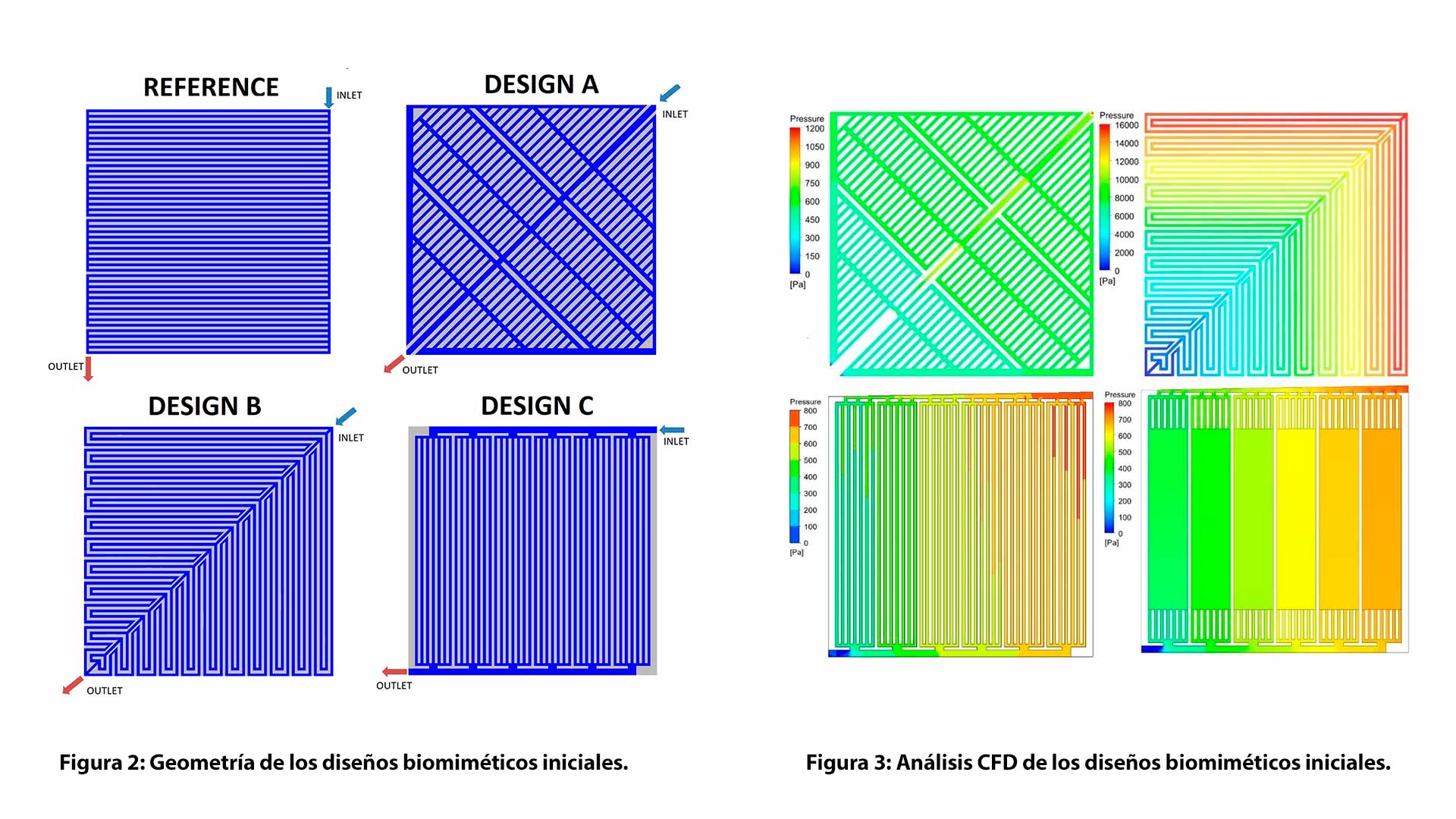
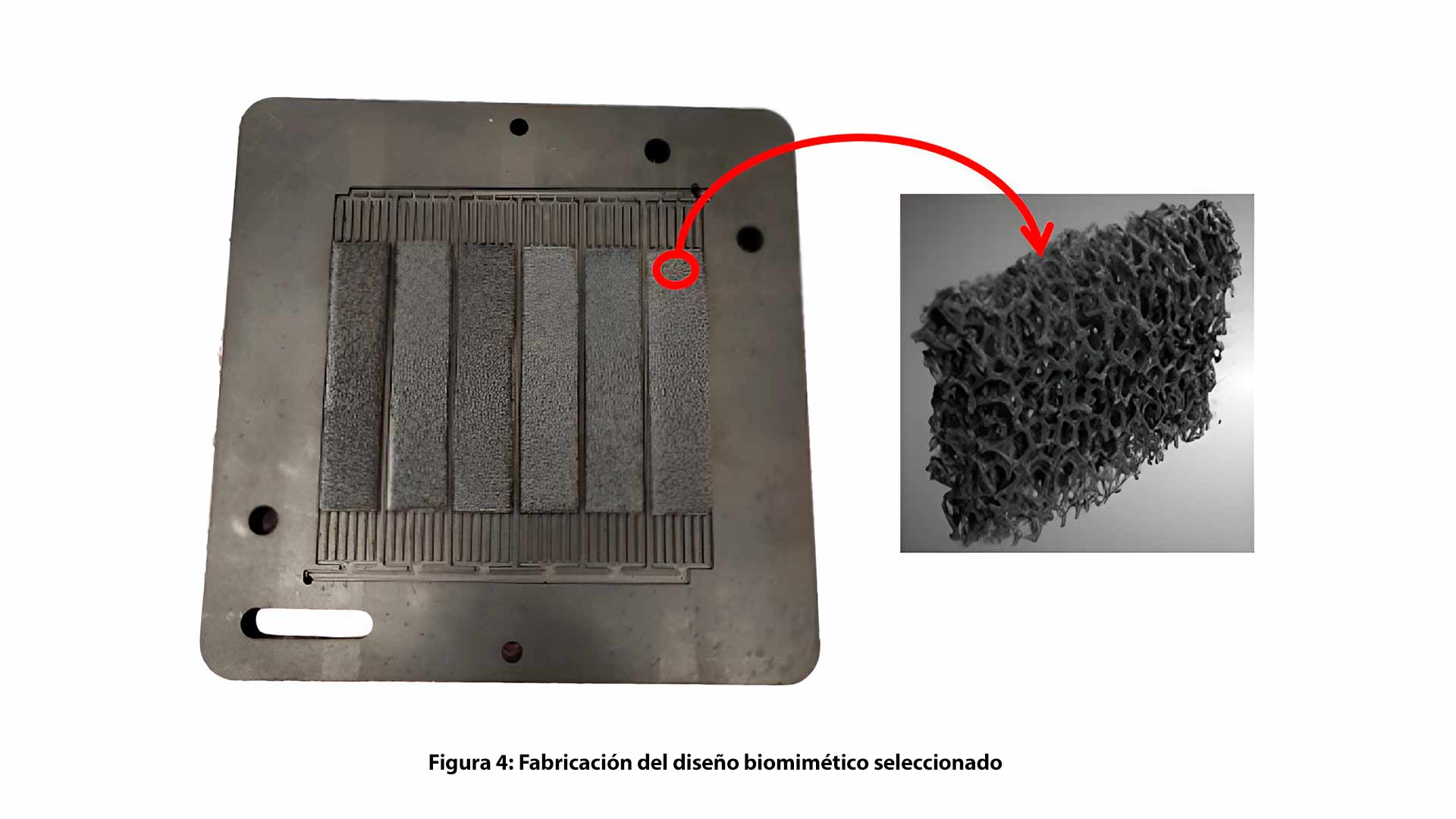
- In the first phase, a series of initial biomimetic fuel cell designs are analyzed using computational fluid dynamics analysis of the flow of different initial biomimetic designs, with the aim of selecting the most promising design. The results of the biomimetic designs are compared with the results of standard, state-of-the-art fuel cell designs, such as the parallel-coil design. The selected design includes porous graphene inserts in the central part of the plate instead of the vertical channels, which are more common in other state-of-the-art designs.
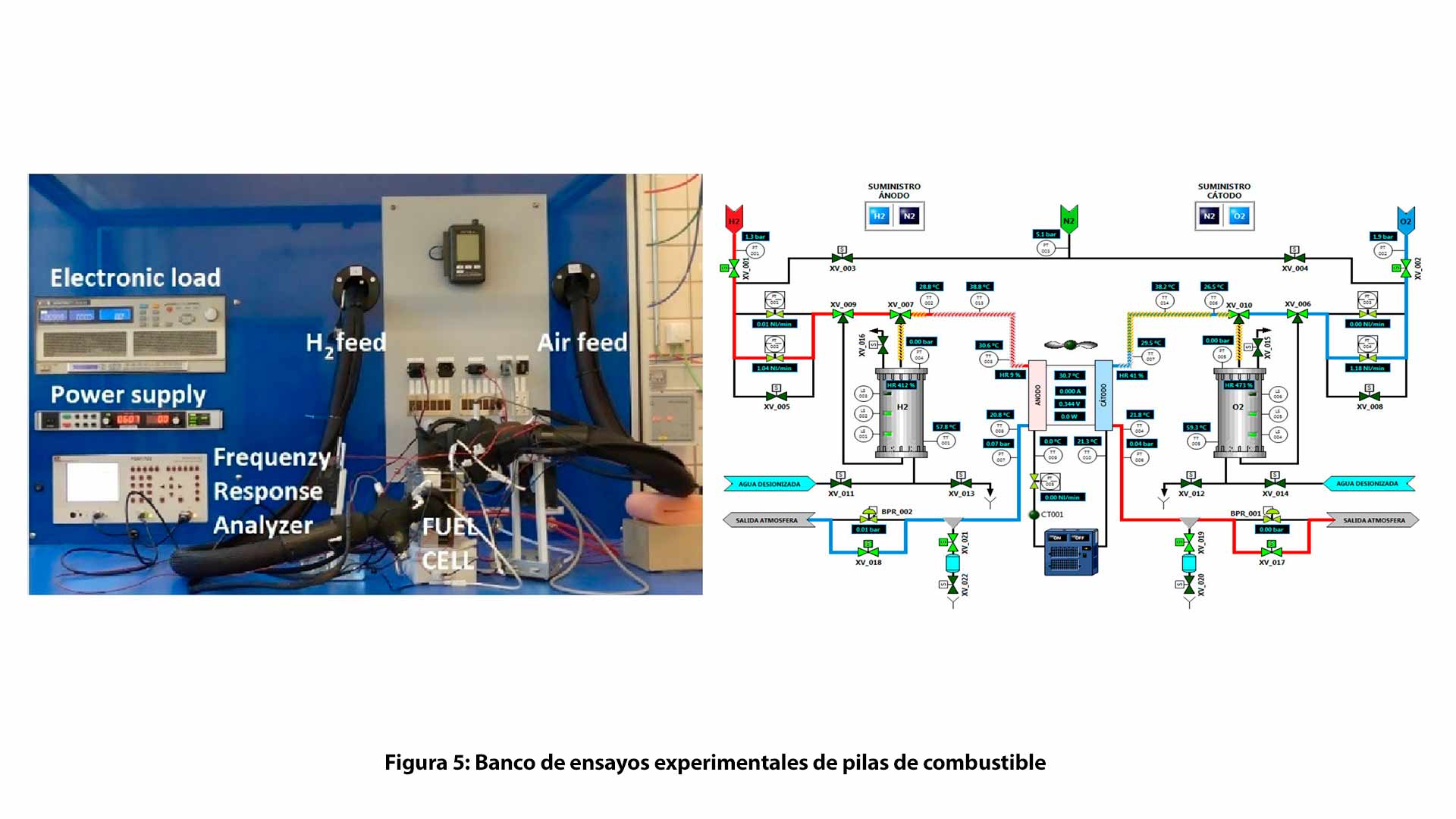
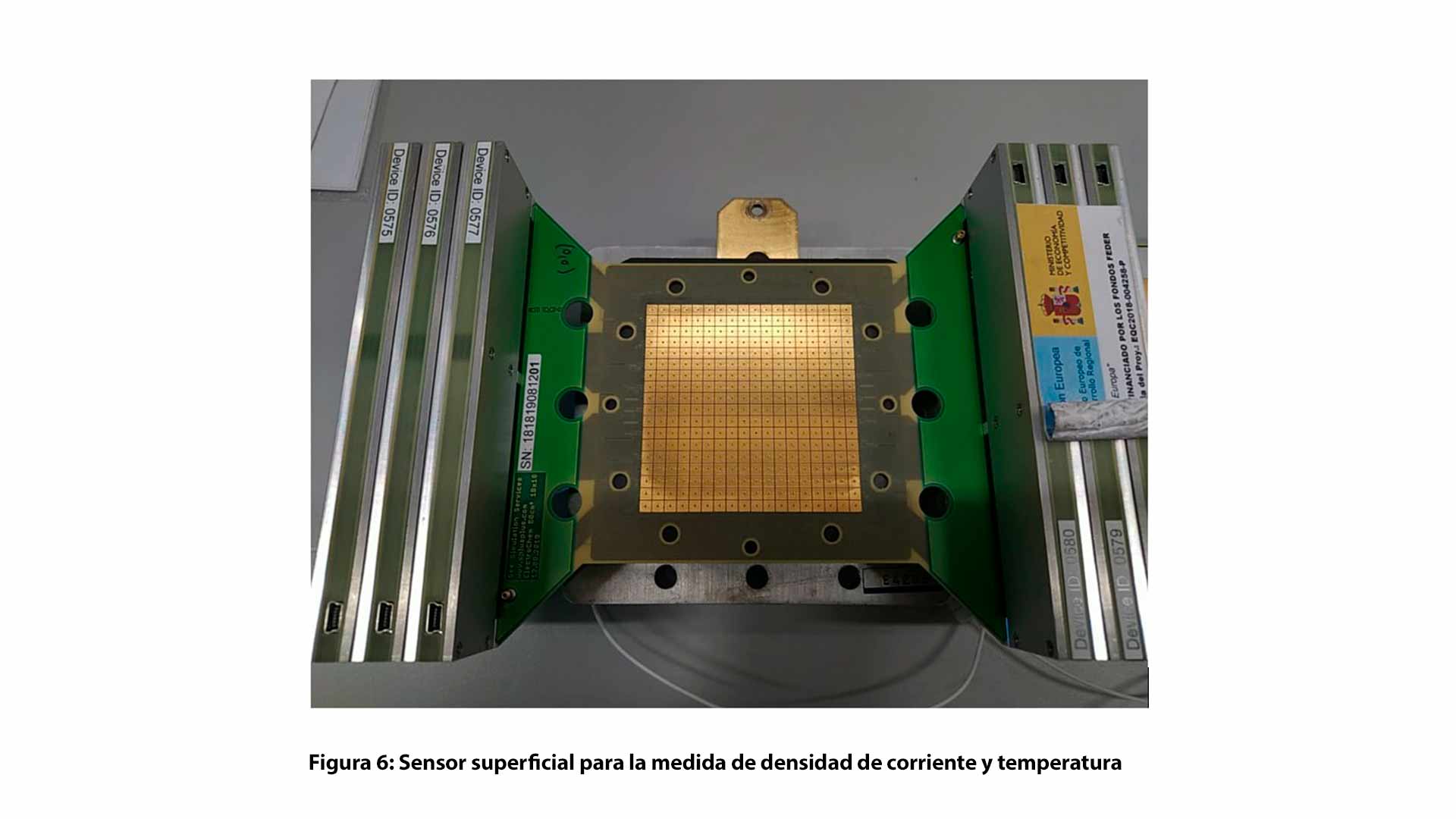
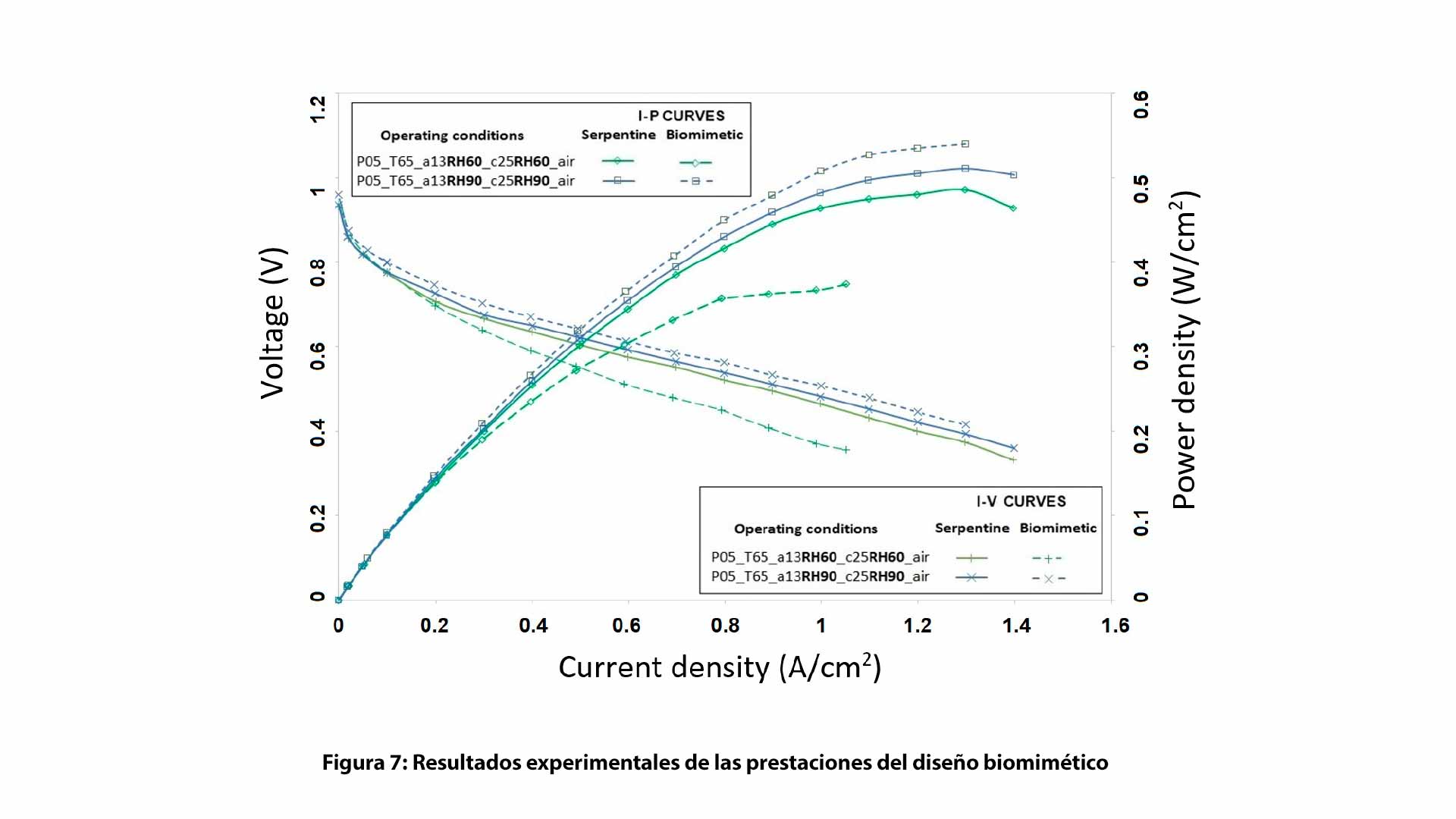
- In a second phase, once the biomimetic design with the best prospects was selected, it was manufactured and experimental tests were carried out to determine its energy performance (IV, EIS, and CDM curves). The experimental tests were performed on the hydrogen fuel cell test bench that the Thermotechnology group has at its facilities. The results of the new biomimetic design were analyzed and compared with a reference parallel-coil model, indicating that the proposed new design is particularly suitable for improving fuel cell water management under high reactant humidity conditions, achieving a maximum power output up to 6.0% higher compared to the reference design.
- In a third phase, after analyzing the previous experimental results, the design is optimized for manufacturing and testing the final prototype. Finally, with the optimized prototype, a 500W power stack is manufactured for the final demonstration of the researched technology.
This publication is part of the R&D project PID2019-104441RB-I00 funded by MCIN/AEI/10.13039/501100011033.
Funding program: State Plan 2017-2020 Challenges - R&D&I Projects

BioPEM-07-ETSi.jpg