Andalucia Racing TEAM, ARUS, presents the first autonomous vehicle designed and built entirely in Andalusia
Andalucia Racing TEAM, ARUS, presents the first autonomous vehicle designed and built entirely in Andalusia
The presentation took place at the Cartuja Science and Technology Park in the context of the eCitySevilla project
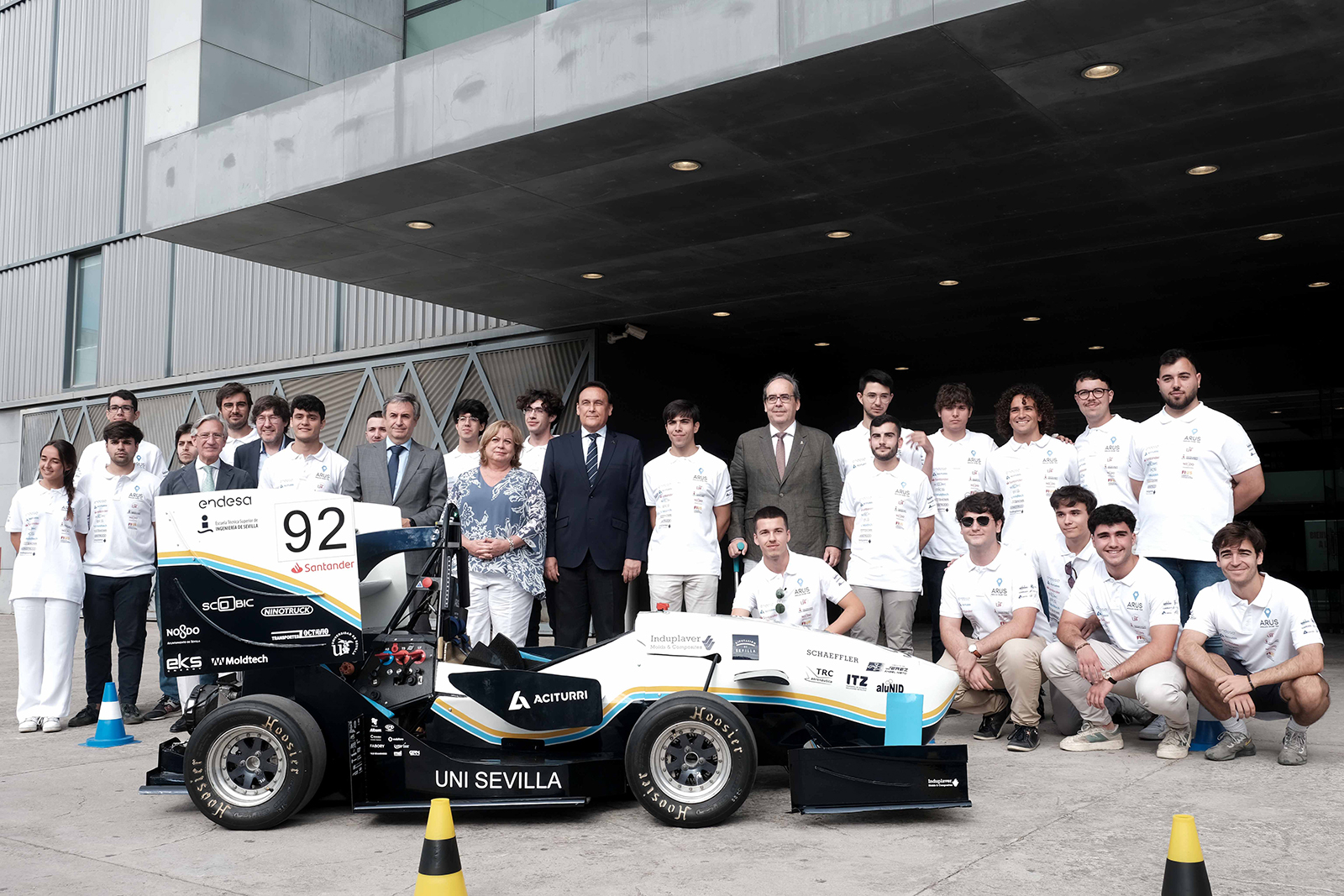
The University of Seville's Automobile Team, Andalucía Racing TEAM ARUS, has celebrated, at the Cartuja Center CITE located in the Cartuja Science and Technology Park, the presentation of its new single-seater, the ART-24D, with which they will compete in the best circuits of Formula Student, 2024.
ARUS, made up of more than 100 students from different undergraduate and master's programs at the University of Seville, will unveil this new model today before an audience of more than 400 attendees. This model represents a major technological milestone in our region, being the first fully autonomous vehicle designed and built entirely in Andalusia.
The event will be attended by Miguel Ángel Castro Arroyo, Rector of the University of Seville; José Carlos Gómez Villamandos, Minister of University, Research and Innovation of the Regional Government of Andalusia; Álvaro Pimentel Siles, Third Deputy Mayor of Seville and Delegate of the Cartuja Area; Andrés Sáez Pérez, Director of the Higher Technical School of Engineering of the University of Seville; Luis Pérez Díaz, General Director of the Cartuja Science and Technology Park; and Pedro García Macías, Team Manager of Andalucía Racing TEAM, ARUS.
The new ART-24D single-seater has the unique feature of being, on the one hand, an electric vehicle, which will allow the team to compete in this category within Formula Student, and for the first time, an autonomous vehicle, which will allow them to compete against other international teams that present prototypes of this same category.
This will be the first autonomous car in Andalusia to compete in any of the categories, and as a novelty, it will not work by radio control, but through sensory codes, algorithms that make the car able to interpret the circuit by itself.
This new Formula Student car model was developed in collaboration with the eCitySevilla project, an initiative of the Andalusian Regional Government, the Seville City Council, Endesa, and the Cartuja Science and Technology Park (PCT Cartuja). The ARUS Team is part of this project, along with around one hundred other entities, including companies, institutions, universities, and research centers. eCitySevilla aims to accelerate the European Union's 2050 energy and climate targets by twenty-five years, promoting sustainable mobility based on the premise that the future of mobility will be electric, connected, and shared.
In parallel, during the development of the ART-24D prototype, the team has been making progress in the development of the car they will present for the 2025 season, which will be the vehicle with the greatest technological advances in ARUS history, including a 4 Wheel Drive transmission system (an integrated motor in each wheel), a carbon fiber monocoque chassis and topologically optimized designs in additive manufacturing among many other advances.
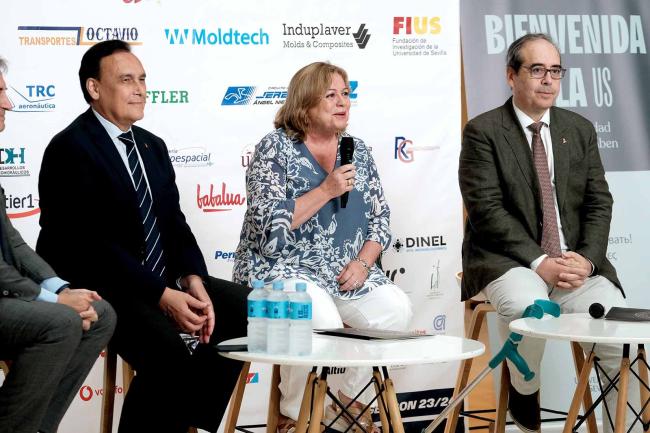
The presentation to the media included Carmen Gallardo Cruz, Vice-Rector for Students at the University of Seville; José Carlos Gómez Villamandos, Councilor for University, Research and Innovation of the Regional Government of Andalusia; Andrés Sáez Pérez, Director of the Higher Technical School of Engineering at the University of Seville; Rafael Sánchez Durán, Director of Endesa for Andalusia, Extremadura, Ceuta and Melilla and representative of the eCitySevilla Project; and Pedro García Macías, Team Manager of Andalucía Racing TEAM ARUS.
Carmen Gallardo Cruz, Vice-Rector of the University of Seville, emphasized that “the University of Seville’s support for ARUS goes beyond the results, which, although important for the team, are what truly matters to us: their professional and personal growth during their time with this project. We have a responsibility to develop individuals, and this team is a prime example of our commitment.” She also highlighted that “it is remarkable that the team members are around 23 years old, yet they are developing technology on par with the best R&D teams.” “It is exciting to accompany them to competitions, as the Rector and some of the Vice-Rectors do, because that is where we can witness and appreciate the team’s full potential.”.
For his part, the Minister of Universities, Research, and Innovation, José Carlos Gómez Villamandos, pointed out that ARUS “is an example of the capabilities of our students, who form a multidisciplinary team capable of meeting the challenge of competing on a global scale with other universities.” He also highlighted that it represents “a new milestone” in the team's twelve-year history, which, “thanks to its ambition, knowledge, and innovative spirit, has progressed from a combustion-engine single-seater to an autonomous vehicle designed to compete using artificial intelligence algorithms.”.
Likewise, he emphasized that this team “is a luxury ambassador” for the Ecity project, in which the Andalusian Regional Government, the Cartuja Science and Technology Park, the Seville City Council and other entities such as Endesa “are allied to transform the Isla de la Cartuja into an open, digital, decarbonized and self-sufficient ecosystem.”.
Furthermore, he highlighted the fact that the students who make up ARUS have managed to apply artificial intelligence to the piloting of this single-seater and, in this regard, he recalled that the new catalog of degrees of the Andalusian universities includes, as in the case of the University of Seville, degrees in the field of artificial intelligence.
Andrés Sáez Pérez, Director of the Higher Technical School of Engineering at the University of Seville, also noted that “although this project originated at the ETSi in 2012, over the years the team has added students from other schools who contribute their knowledge and experience in other areas. They are therefore a multidisciplinary group that has managed to reach the top of Formula Student.”.
Pedro García Macías, Team Manager of ARUS, expressed his satisfaction with the work carried out this year by the team, which has been able to design and create a "driverless single-seater with which we hope to take the University of Seville, the city of Seville, and Andalusia to the top of the competition." He also thanked the team, sponsors, and institutions for their support and involvement, without which this project would not have been possible.
For Rafael Sánchez, Director of Endesa in Andalusia, Extremadura, Ceuta, and Melilla, “it is a source of pride to be able to accompany the Arus team at the presentation of the first prototype of an autonomous electric vehicle built in Andalusia by students from the University of Seville, and to do so under the umbrella of the eCitySevilla project. At Endesa, we have been supporting the Arus Racing Team since 2018, when we recognized its potential and the young talent driving it, thus fulfilling our commitment to Andalusian engineering and to promoting sustainable mobility, a strategic pillar in the fight against climate change and the achievement of the energy transition.”.
A team that reaps success
The University of Seville's Formula Student Racing Team, which competes annually in the Formula Student series, was founded in 2012 at the University of Seville's Higher Technical School of Engineering (ETSi), where it remains based. It originated from the initiative of a group of engineering students who recognized the need to integrate students from other disciplines into their association, students who could contribute their expertise in fields outside the engineering sector. In this way, it grew and became what it is today: a racing team that designs, manufactures, and seeks funding to create a competition vehicle each season, competing in various categories – combustion, electric, and this season, autonomous.
Last season they abandoned the combustion engine car and are now fully focused on an electric and autonomous vehicle that will take them to compete in the main European Formula Student events, whose regulations also require them to introduce new features to the chassis every year.
With this new prototype, in manual electric and autonomous versions, ARUS aims to surpass the successes of past editions – the electric vehicle of ARUS Andalucía Racing Team managed to position itself in first place among the rest of the Spanish teams – debuting for the first time in Formula Student with this new autonomous vehicle.
During January, the qualifying tests were held to determine which circuits will host the races next August. Around 700 teams from around the world participated. The teams with the best results were able to choose which events they would attend, always selecting the highest-level circuits. This was the case for the US Automobile Team.
This year ARUS will visit Formula Student Spain, at the Circuit de Barcelona – Catalunya, and Formula Student Germany, the most prestigious competition of all, with an incredible second division position in the entrance exams, at Hockenheimring and Formula Student Alpe Adria at the Bugatti-Rimac test circuit, Croatia.