The ETSi welcomes more than five hundred secondary school students to the event “The STEM+H option” organized by the Corteva Chair and the Social Council of the US
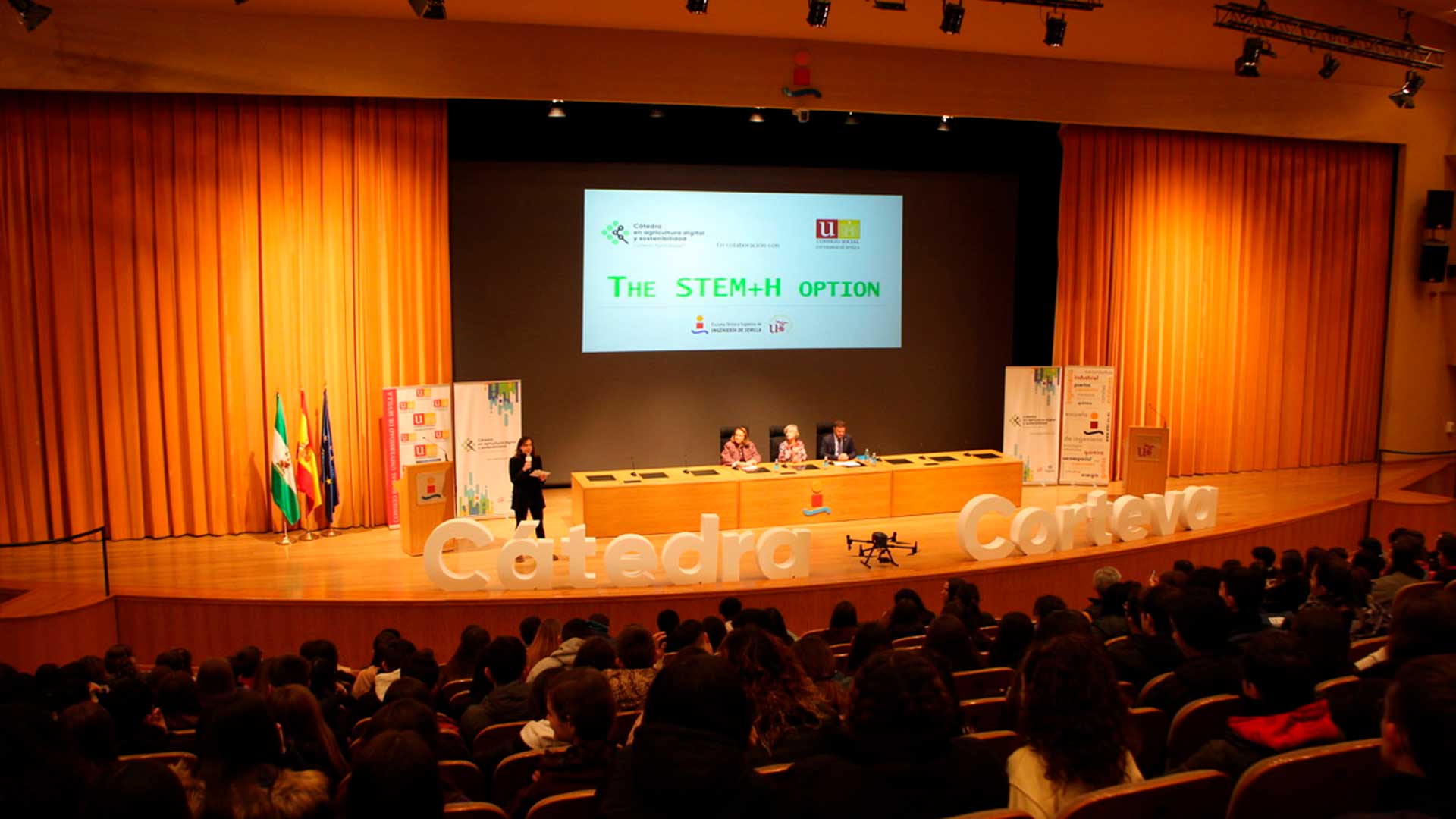
The ETSi hosts The STEM+H option, an event organized by the Corteva Chair and the Social Council of the US, to promote the choice of STEM+H university education in more than five hundred boys and girls from Secondary School.
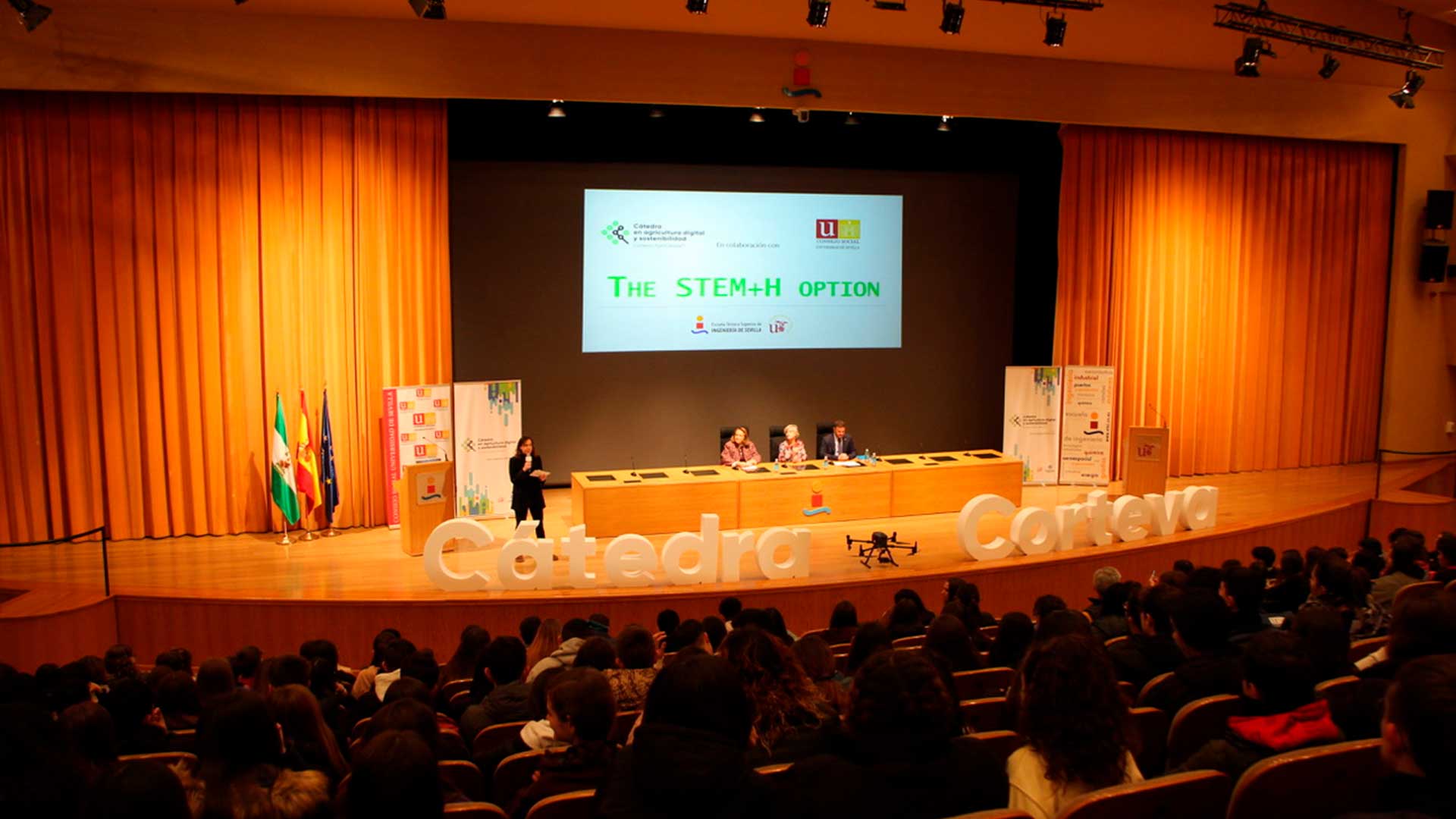
The Higher Technical School of Engineering (ETSi) at the University of Seville was the chosen venue for The STEM+H option , which took place on February 7th. The event featured five leading experts in physics, mathematics, computer science, agronomy, and aviation, who offered an inclusive and inspiring vision of the most valuable applications of these disciplines, emphasizing their strengths and, above all, how they complement each other to generate excellent results and foster key contributions to improving our world.
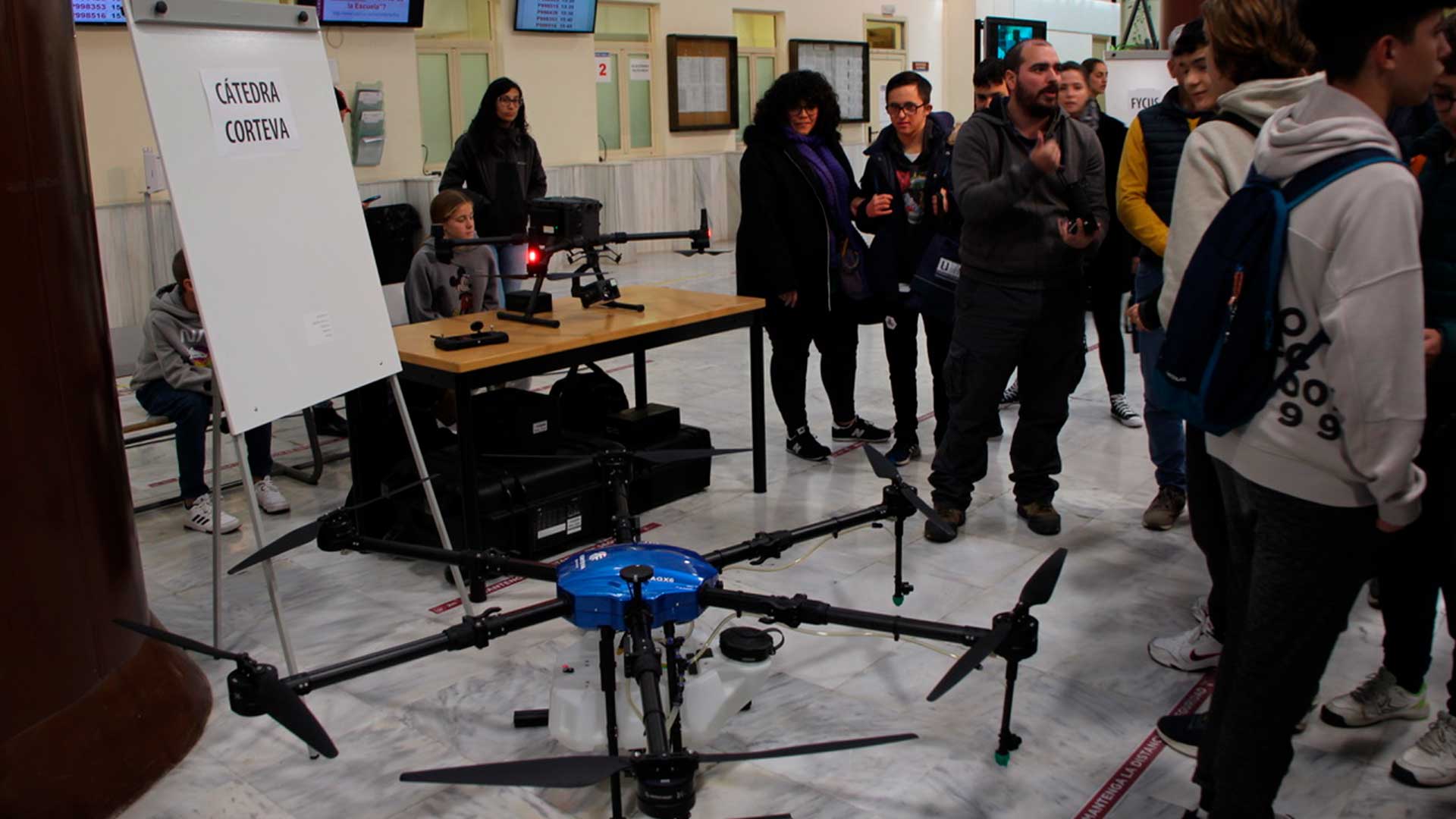
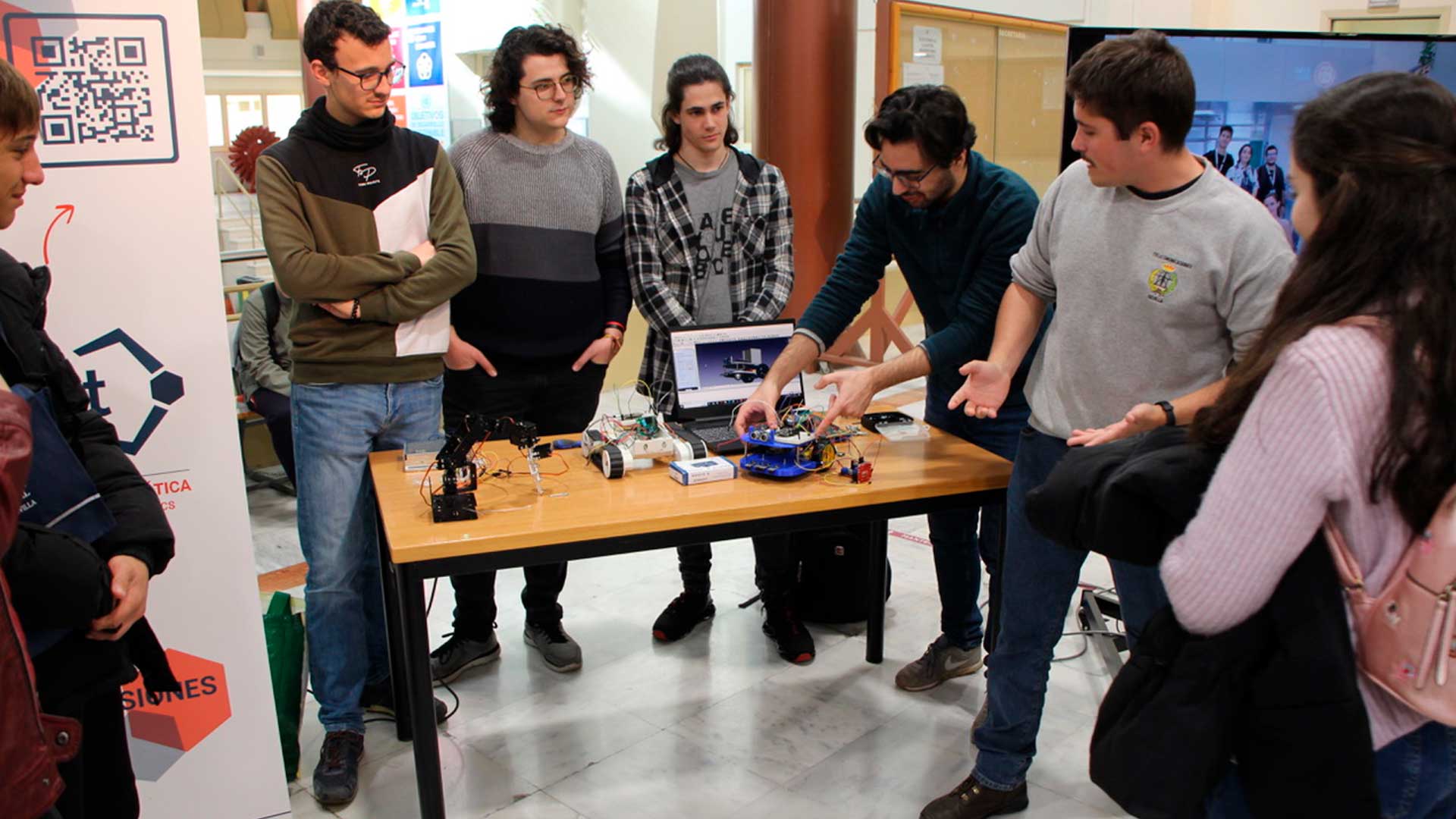
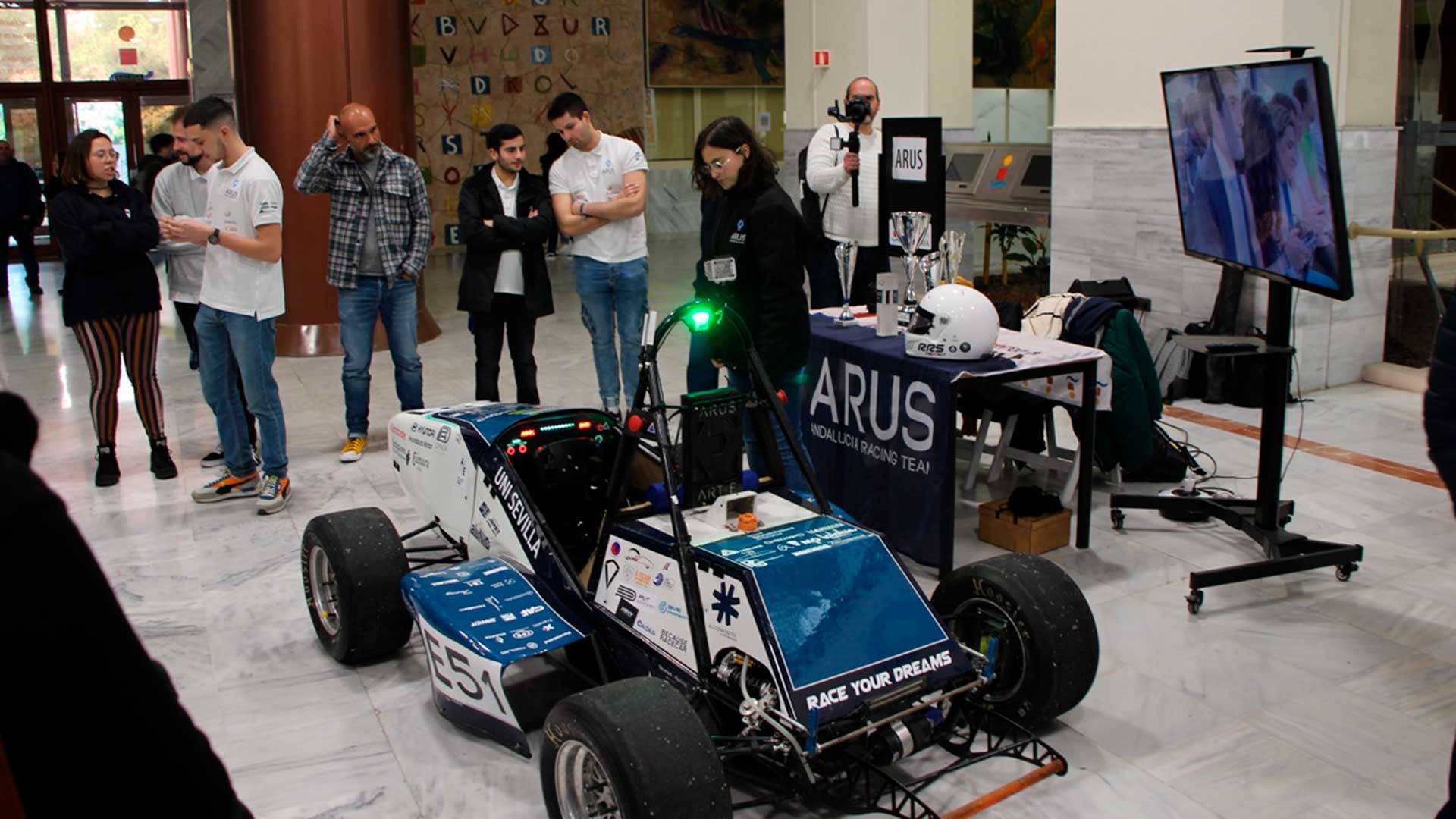
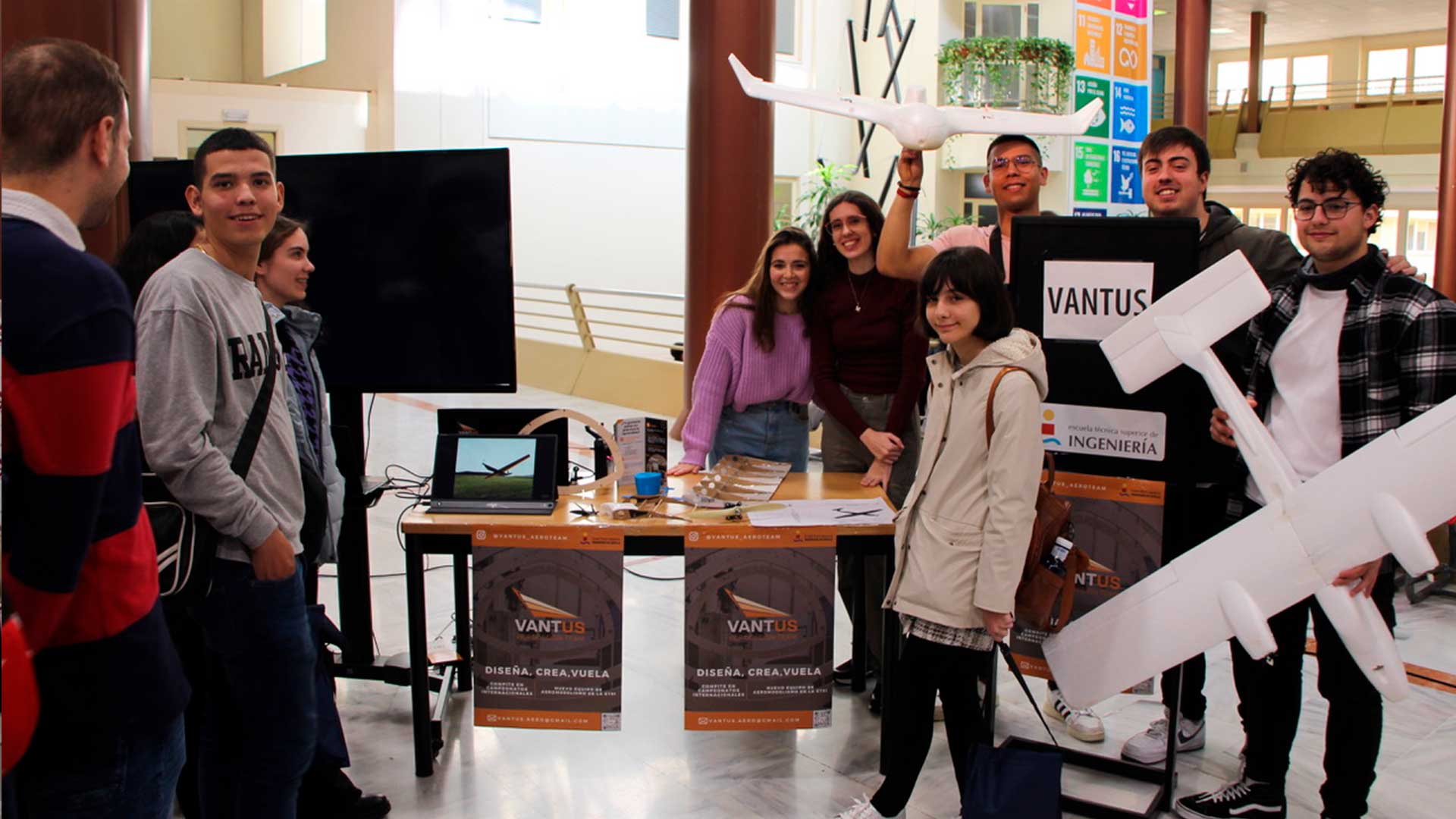
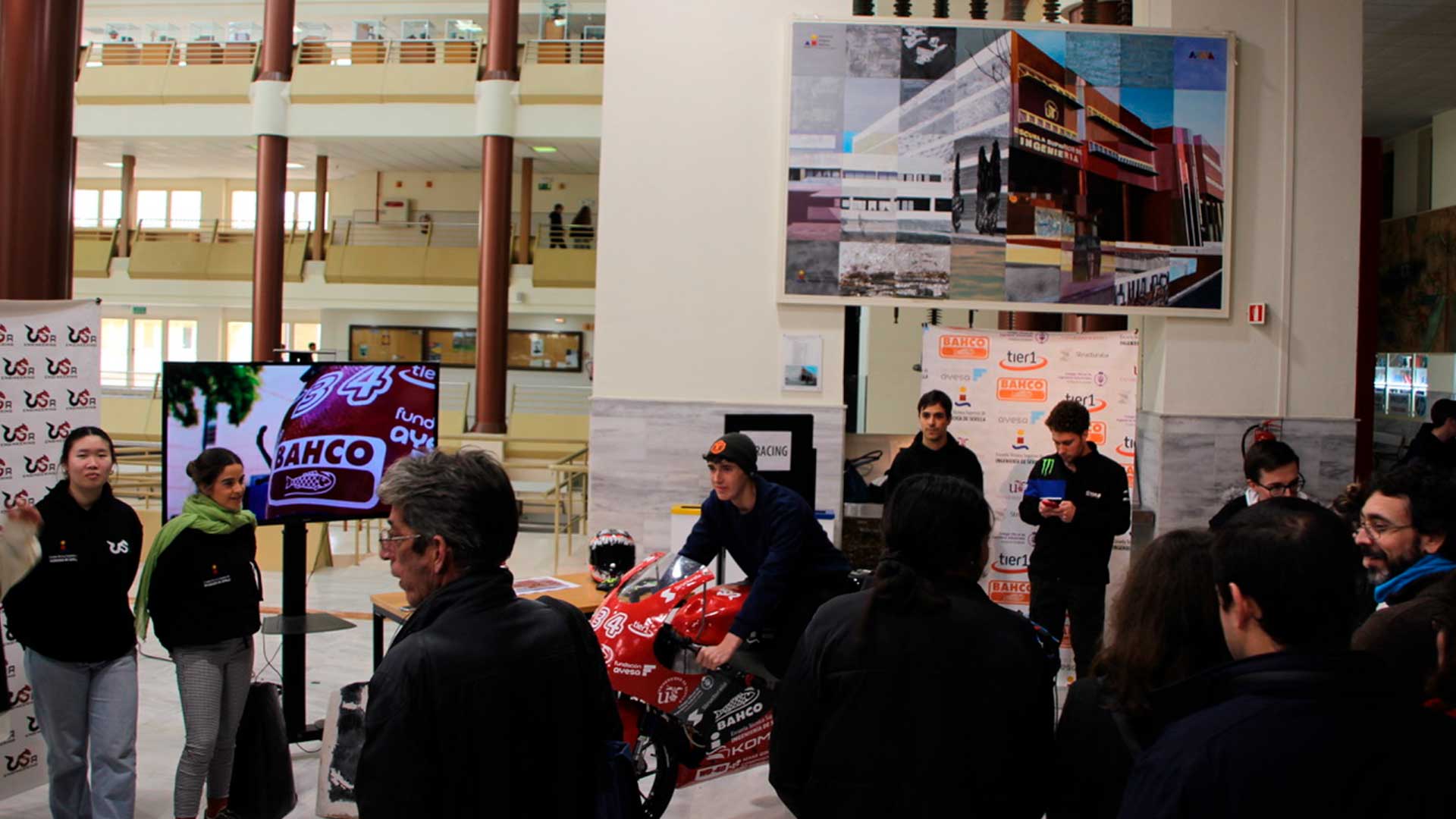
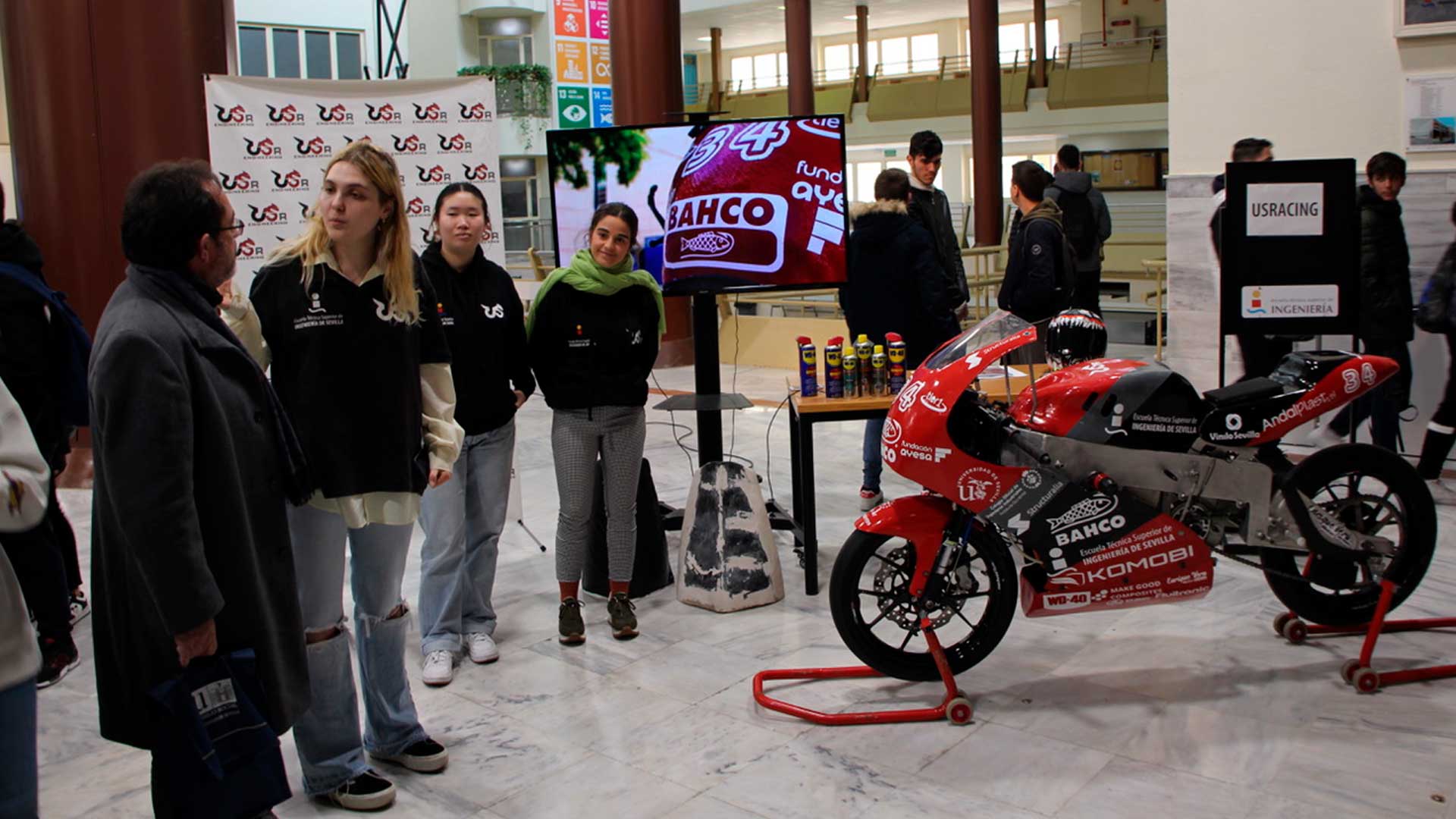
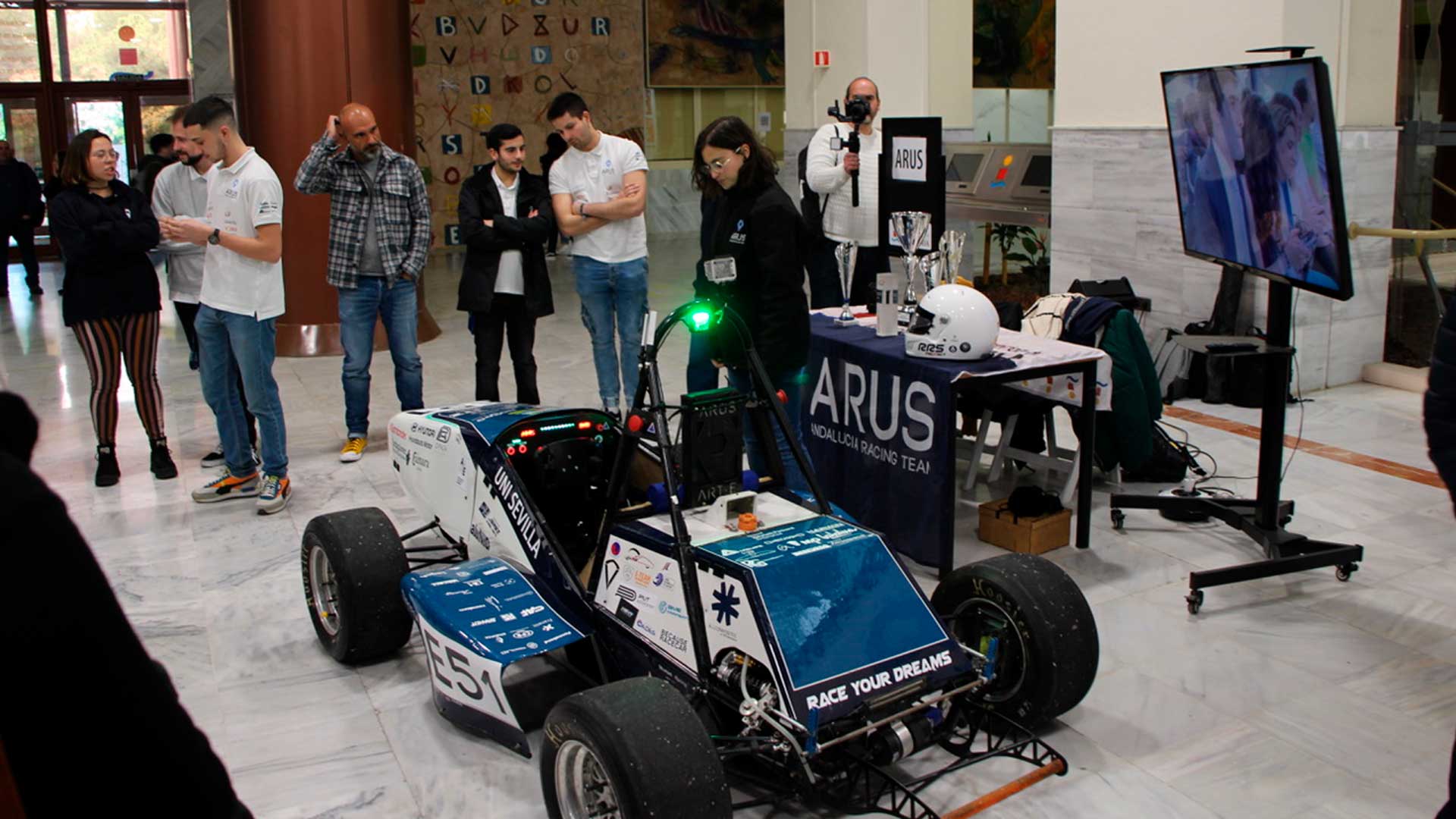
The event also offered participants the opportunity to interact with drones, racing cars and motorcycles, robots, model airplanes, and satellites. These are multidisciplinary programs, promoted by the University of Seville, in which students from all degree programs participate and through which they compete in international competitions.
Concha Yoldi García, president of the Social Council, and Manuel Pérez Ruiz, director of the Corteva Chair, conveyed similar messages: “We want the participating girls and boys to feel that they truly have the capacity to improve the world. Both STEM and the Humanities are magnificent paths to this; they simply need to maintain a curious mind to draw from both sources and integrate them into their development. The future demands multidisciplinary professionals with a strong social commitment. Today, we are here to instill a passion for knowledge and for all that can be achieved with it, so that they explore their passions and pursue their dreams, whatever path they choose.”
The STEM+H option is an initiative of the Corteva Chair and the Social Council of the University of Seville
The Social Council of the University of Seville guarantees the participation of society in the university, integrating social and academic interests into its mission. The Corteva Chair is the result of an agreement between the University of Seville and Corteva Agriscience to promote corporate social responsibility activities. The efforts of the Social Council and the Corteva Chair converge on improving student employability, increasing the transfer of knowledge from the university to society, and supporting non-profit organizations in order to foster sustainable economic and social development by mitigating social inequalities in all areas.
The event is a testament to that commitment, offering students a unique and engaging opportunity to learn more about the limitless possibilities of STEM and the humanities, showcasing the best of both worlds.
The speakers who participated in the event were:
- Eleonora Viezzer, Professor of Physics at the University of Seville and recent recipient of the Physics Prize from the Royal Spanish Physics Society-BBVA Foundation and the Princess of Girona Foundation.
- Jesús Soto Prieto, professor of Mathematics at the University of Seville and winner of the National Science in Action Award and the University of Seville Science Award.
- Pedro Escobar Rubio, computer scientist and winner of the Entrepreneurship Competition at the University of Seville.
- Carmen Sánchez Franco, agronomist, Master in Digital Agriculture and Agri-food Innovation from the US and expert in geomatics and remote sensing with satellite images.
- Antonio Sousa Lamasis a pilot of all types of aircraft and a security expert. He is the president of the Spanish Association of Expertise in Intelligent Systems and a professor at several universities.
The organization thanks these individuals, as well as the ETSi , for their support in The STEM+H option possible. Equally grateful are the student teams who presented their work, allowing younger students to interact with the devices and demonstrating the need for contributions from different disciplines to complete a unique project.
The multidisciplinary teams that presented at The STEM+H option are:
- ARUS is the team made up of more than 90 students who, during the academic year, design and assemble an electric single-seater to compete in Formula Student.
- ESIBot is a university association specializing in robotics that organizes courses, excursions and projects in various branches of engineering to provide a global vision of the world of technology.
- FYCUS is an international project of students who organize themselves to design, assemble, ground test and then fly a CubeSat that fulfills one or more previously defined missions.
- USRacing is dedicated to creating an electric motorcycle from scratch that will compete against teams from all over the world in the Moto Student discipline.
- VANTUS is the US aeromodelling team. They design, build, and fly radio-controlled aircraft to compete in various championships.
- GO Phytodron. Aerial equipment for the application of plant protection products in the agricultural sector.
The International Day of Women and Girls in Science has been celebrated worldwide since its proclamation by the United Nations General Assembly in 2015. Since then, numerous institutions have carried out activities aimed at fostering scientific and technological vocations among girls and adolescents, highlighting the work of female scientists and technologists, and creating female role models in STEM fields. These activities promote practices that encourage gender equality in science, with the goal of eliminating gender stereotypes within the fields of science and technology.
STEM is an acronym for Science, Technology, Engineering, and Mathematics. It refers to the areas of the economy that currently have the highest demand for jobs and are expected to continue to do so in the future. In addition to technical knowledge, "soft skills" are required, such as creativity, critical thinking, service orientation, collaboration, communication, and problem-solving abilities.
However, despite the increased demand, thousands of jobs remain unfilled in Spain and across Europe due to a lack of qualified professionals and a decline in STEM. This decline is even more pronounced for girls, whose representation falls below 20% of the total student body in many engineering and computer science degrees.
The lack of gender equity in these degree programs can widen the wage and employment gap between men and women. To help reverse this trend, the Corteva Chair and the Social Council of the University of Seville (US) organized this innovative event to showcase the best of the humanities and STEM to new generations and motivate them to approach their future with an integrated and multidisciplinary perspective.