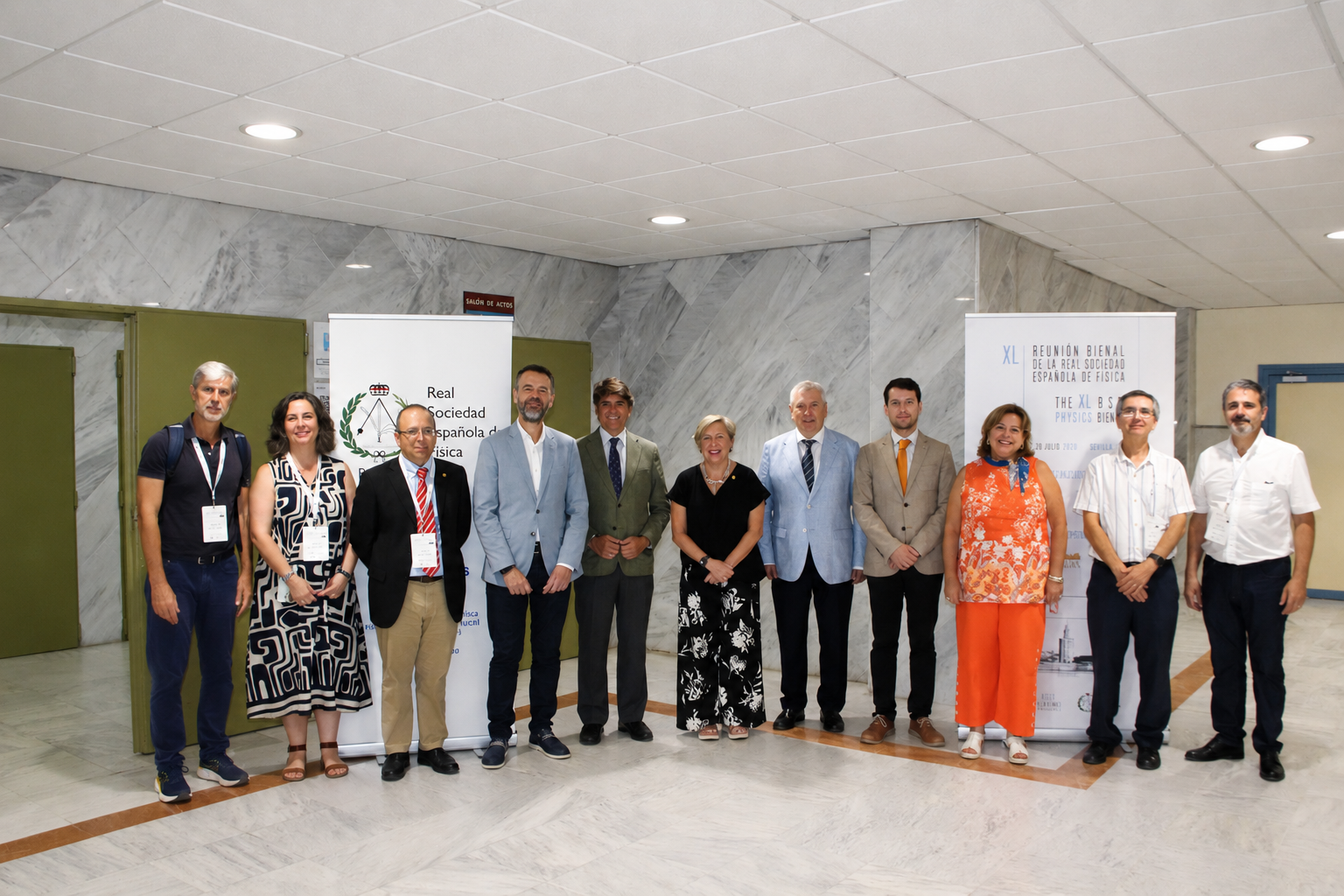
The 40th Biennial of the Royal Spanish Society of Physics turns Seville into the capital of Spanish physics
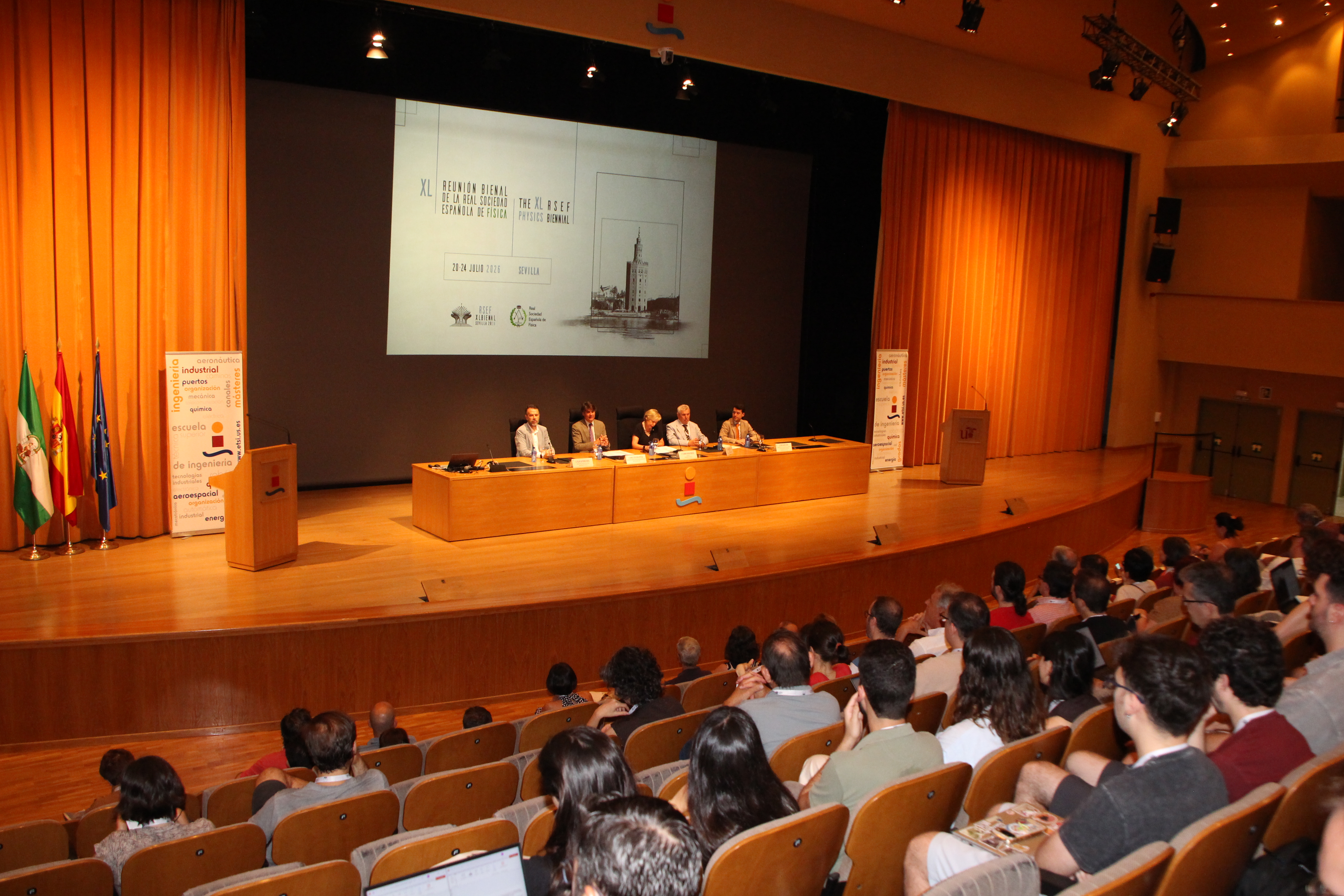
The University of Seville is hosting from today until July 24 the main scientific event in Spanish physics, with more than 430 participants, 400 scientific communications and a wide program of conferences, symposia and outreach activities.
The Higher Technical School of Engineering at the University of Seville is hosting the 40th Biennial Meeting of the Royal Spanish Physics Society (RSEF), which will make Seville the Spanish capital of physics for this week. The meeting, one of the most important in the field of physics in Spain, will bring together more than 430 researchers, professors, students, and professionals from universities, research centers, and national and international institutions until July 24th to share the latest advances in the discipline.
The opening ceremony was attended by the Rector of the University of Seville, Carmen Vargas Macías; the President of the Royal Spanish Society of Physics, Luis Viña Liste; the Secretary General for Research and Innovation of the Regional Government of Andalusia, Daniel Escacena Ortega; the Dean of the Faculty of Physics of the University of Seville, Felipe Gutiérrez Mora; and the Deputy Director and Head of Studies of the Higher Technical School of Engineering of the University of Seville, Pedro García Haro.
Over five days, the Biennial will offer an intensive scientific program comprising 15 plenary lectures, 25 specialized symposia, three roundtables, and nearly 400 scientific presentations, including oral presentations and posters. The event provides an opportunity to strengthen scientific cooperation, promote knowledge exchange, and raise the profile of physics research conducted in Spain, one of the scientific fields with the greatest impact on society and technological progress.
Participants will address highly topical issues in fields such as fundamental physics, condensed matter physics, optics, photonics, particle physics, astrophysics, nuclear physics, quantum information, physics teaching and outreach, as well as numerous industrial and technological applications. Among the program's highlights are an analysis of how sociophysical methods and models can contribute to understanding political polarization; the physics of solar eclipses, their cycles, and their relevance to scientific research; the role of the hospital radiophysicist in the precise calculation of radiation in proton therapy for cancer; and the origins and importance of graphene, considered one of the most promising materials in nanotechnology and known as the "gift of God.".
The program also includes various symposia organized by the divisions and specialized groups of the RSEF, including the traditional Iberian Meeting on Teaching and Dissemination of Physics, established as one of the main forums for the exchange of experiences in this field.
The Seville edition also maintains a strong commitment to supporting young researchers and outreach activities aimed at the general public, with the goal of bringing physics closer to society and highlighting its essential role in technological development, innovation and solving the great challenges of the 21st century.
The celebration of this fortieth edition in Seville represents a recognition of the scientific potential of the city and its academic institutions, consolidating it during this week as a meeting point of reference for the Spanish physics community.
The organization of the congress, together with the organizing committee, has the collaboration of 30 volunteers, all of them students of the Faculty of Physics of the University of Seville and doctoral students of this center, whose participation is fundamental for the development of the different scientific and organizational activities planned during the Biennial.