
The University of Seville and Indra create the Space Surveillance Chair to promote R&D activities and specialized talent
The University of Seville and Indra create the Space Surveillance Chair to promote R&D activities and specialized talent
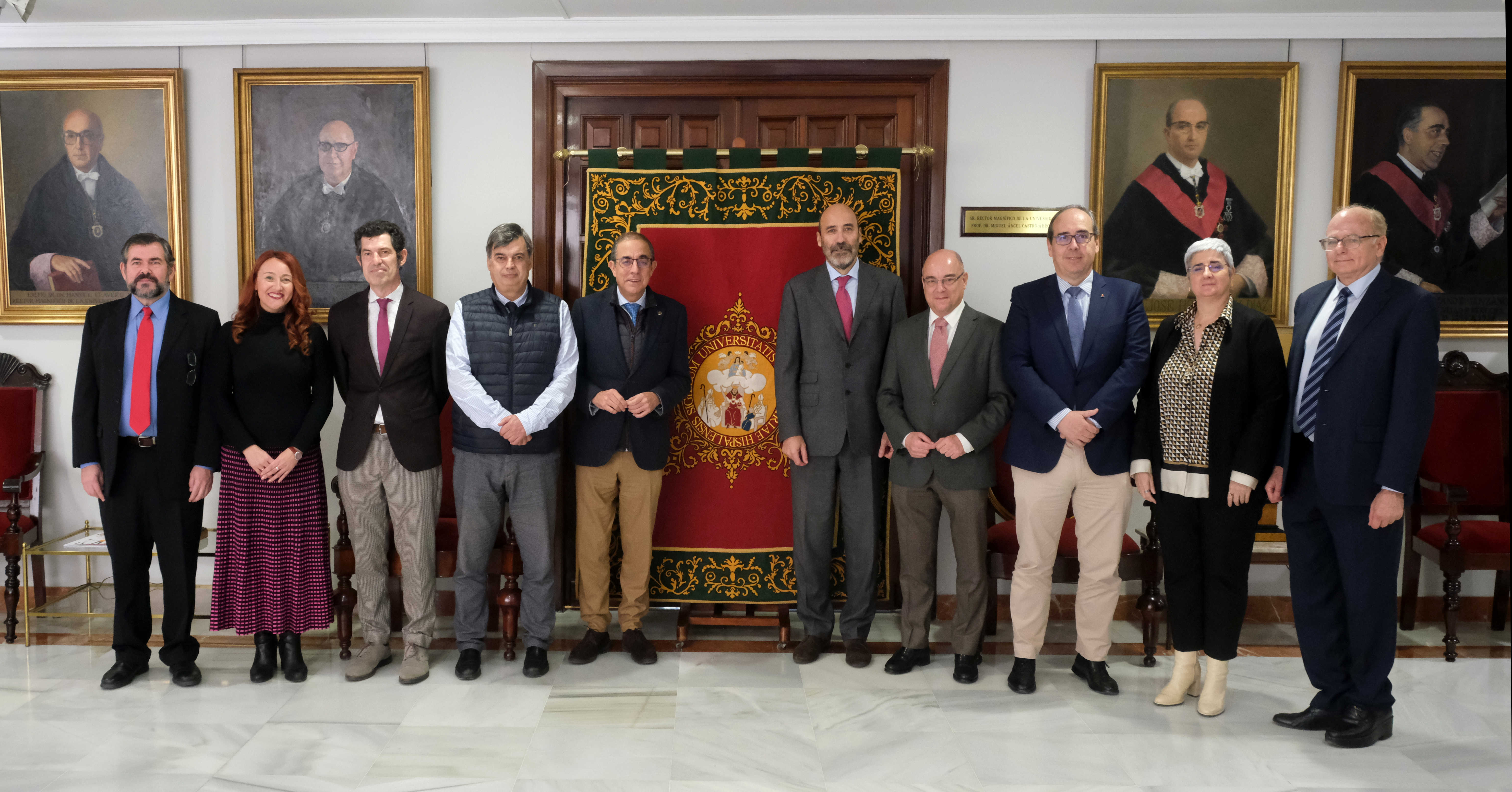
The University of Seville and Indra have signed a collaboration and sponsorship agreement for the creation of the 'Space Surveillance' Chair, which aims to jointly develop R&D activities and promote interdisciplinary teaching and research activities related to the space sector.
Thanks to the agreement, signed by Miguel Ángel Castro, rector of the University of Seville, and Miguel Ángel Morell, Chief Technology Officer (CTO) of Indra, academic work, final degree projects and doctoral theses linked to the development of new space technologies and that use Artificial Intelligence (AI) or big data, among others, will be promoted, as well as opportunities for collaboration with the Spanish Space Agency (AEE).
Furthermore, the collaboration between the two entities will enable the joint implementation of R&D activities and postgraduate and highly specialized courses for students and professionals; the development of promotional, outreach, study, training, and research activities; as well as the organization of forums for academic, business, and student personnel. Both the establishment of the chair and its development are closely linked to the Higher Technical School of Engineering of Seville (ETSI) , where the Bachelor's Degree in Aerospace Engineering and the Master's Degree in Aeronautical Engineering are offered . These programs are part of the PEGASUS European aerospace excellence network, and approximately 150 students graduate from them each year.
50 million in microcredits
During the event, the rector highlighted the diverse possibilities offered by this agreement, among which he emphasized the development of micro-credentials, for which the European Union has approved €50 million in 2024. "Of this amount," he stated, "around a quarter will come from Andalusia, and in general, the University of Seville represents a quarter of the total number of Andalusian universities, so we will have the financial resources to undertake new projects." The rector also referred, in connection with the newly created chair, to the investments being received by the Seville Center for Innovation in Unmanned Aerial Vehicles and Urban Air Mobility (CUAM), which received €6 million last year for its launch and will receive an additional €9 million this year.
“This agreement with the University of Seville demonstrates Indra’s commitment to Andalusian and Sevillian talent in a future-oriented and highly specialized sector where Andalusian and Spanish industry and professionals have the opportunity to play a leading role,” explained Miguel Morell, CTO of Indra.
The space sector is booming due to its enormous potential and the disruptive advances taking place in recent years, and according to various studies, it is expected to grow at annual rates close to 7% until 2026. The economy, security and defense of countries increasingly depend on services provided from space, which makes satellites a strategic asset .
Indra
Indra has played a key role in the development of major European space infrastructures, most notably the Copernicus Earth observation system and the Galileo global positioning system. It has also deployed the ground segment of the Spanish Earth observation satellite Paz and launched Startical, a company created by Indra in collaboration with ENAIRE, which will deploy a constellation of more than 200 satellites to improve air traffic management worldwide from space.
In Andalusia, Indra has a presence in every province, with seven main centers, an innovation lab, and two project offices, employing around 2,500 professionals. In Seville alone, it has 1,700 professionals and three work centers.


