
NASA engineer Carlos García Galán brings the space race closer to more than 700 young people at the ETSI
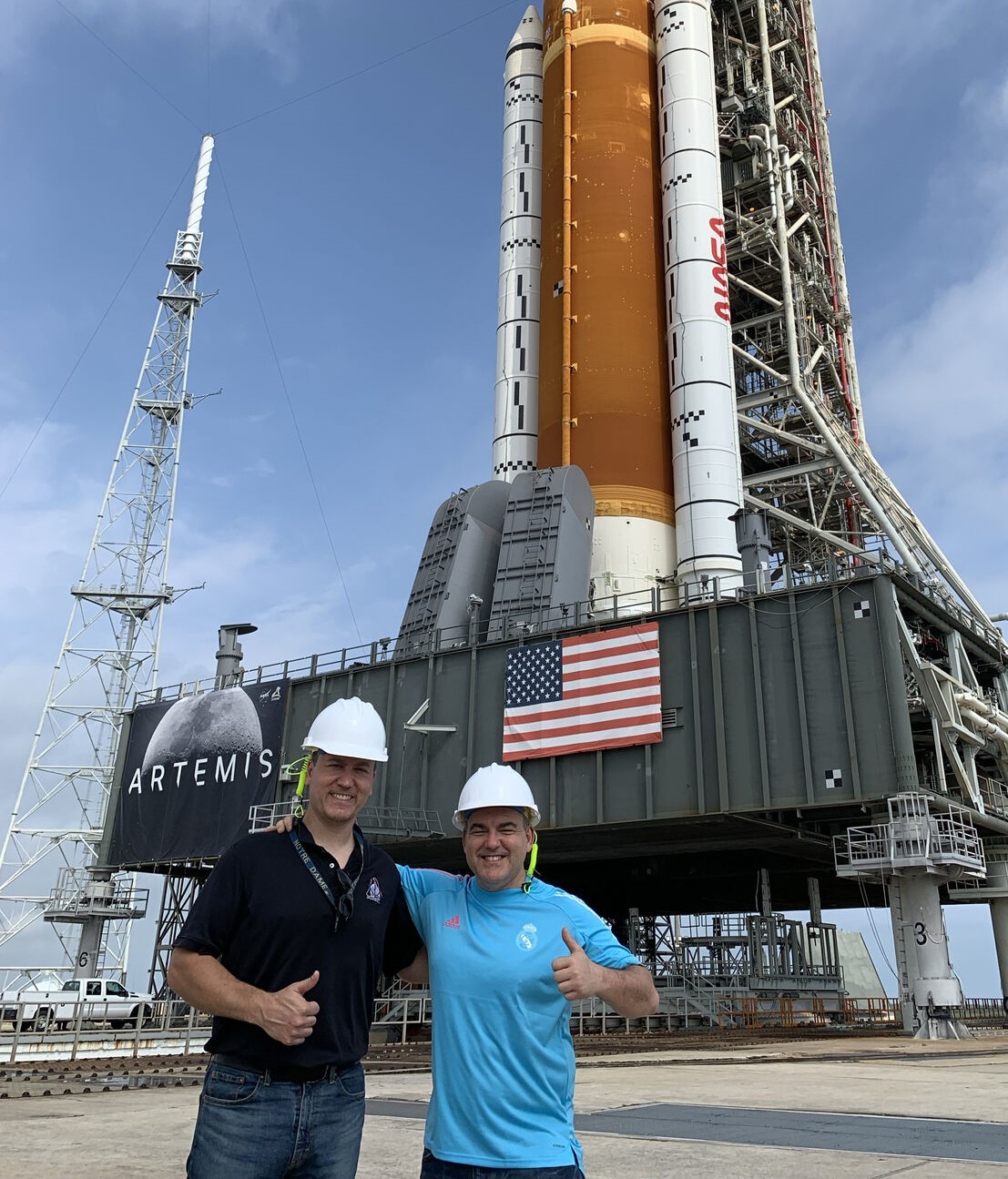
NASA engineer Carlos García-Galán spoke today at the Higher Technical School of Engineering of the University of Seville , in front of an audience of more than 700 high school and university students, about the advances that the Artemis I Mission has brought to the space race .
Fifty years after humans last set foot on the Moon aboard Apollo 17, on November 16, 2022, engineers and scientists from NASA's Artemis I Mission managed to make a visit with the purpose of continuing to advance in what will be the next challenge: turning this natural satellite into the technological testing platform to reach the next goal in the space race, Mars.
Carlos García-Galán is the Head of the European Service Module (ESM) Integration Office for the Orion spacecraft at NASA's Glenn Research Center, which orbited the Moon for 26 days. He has also participated in other aspects of the design and integration of the Orion spacecraft and the Artemis missions.
During the Artemis I mission, he led the Orion engineering team that supported all operations from launch to return to Earth.
During his presentation, García-Galán explained to the young people that NASA hopes to be working on Mars as early as 2030. “During this decade, we will be working on the systems and infrastructure to return to the Moon, and in the next decade on the lunar base and the technologies necessary to reach and live on Mars. The engineers who are currently working on Artemis will take the first step, but you are the Artemis generation, and you will take us to Mars,” García-Galán stated.
The Spanish engineer is currently visiting all the European countries participating in Artemis I to share the results and explain NASA's next steps. This meeting with the students of the ETSI (School of Engineering) was organized by the Ellas Vuelan Alto (EVA) Association, whose main objective is to highlight female talent in the aerospace sector and ensure that women play a leading role in this second space race.
In this regard, Irene Rivera, Head of Space at EVA, addressed the young attendees with a message to help break the glass ceiling: “In 1969, a group of women, the Mercury 13, were ready to go to the Moon. They weren't allowed to. May no girl here today find limits to going to the Moon, to Mars, or wherever she wants to go!”
She also emphasized that “it’s no longer necessary to be born or study in the United States to work at NASA. You can do it from here, from Seville, and from anywhere in Spain. You are part of the #ArtemisGeneration!”.
Following the conference, a round table discussion took place with the participation of top-level professionals, including Jim Geffre, Head of Vehicle Integration for the Orion spacecraft – NASA; Juana Martínez Heredia, Researcher at the Higher Technical School of Engineering of the University of Seville; Silvia De los Santos Trigo, Head of the Aerospace Sector at CTA and Technical Assistance to the Presidency of Seville Ariane City; and Sonia Fereres, Researcherat the Joint Research Centre – European Commission.
Next, Isabel Pérez Grande, Director of Science, Technology and Innovation at the Spanish Space Agency, addressed the students present, delivering an important message: “Space is fascinating. I encourage you to consider pursuing a career in this field. It is possible to work in space from numerous scientific and technical disciplines, ranging from various branches of engineering to sciences such as physics, chemistry, geology, and biology, among others.”
Andrés Sáez Pérez, Director of the Higher Technical School of Engineering at the University of Seville, opened the debate and welcomed the attendees. Sáez Pérez expressed his gratitude for the presence at the ETSi of such prestigious figures in aerospace engineering, highlighting the importance of events like this for fostering interest in STEM professions among future professionals in the sector in general, and for attracting female talent in particular. He emphasized "the need to provide role models in the world of STEM professions, both for teenage girls who must decide on their academic and professional future, and for women who will be entering the workforce in the coming years."
This event is part of the program of activities for World Space Week, which will be held from October 4 to 10, 2023.


