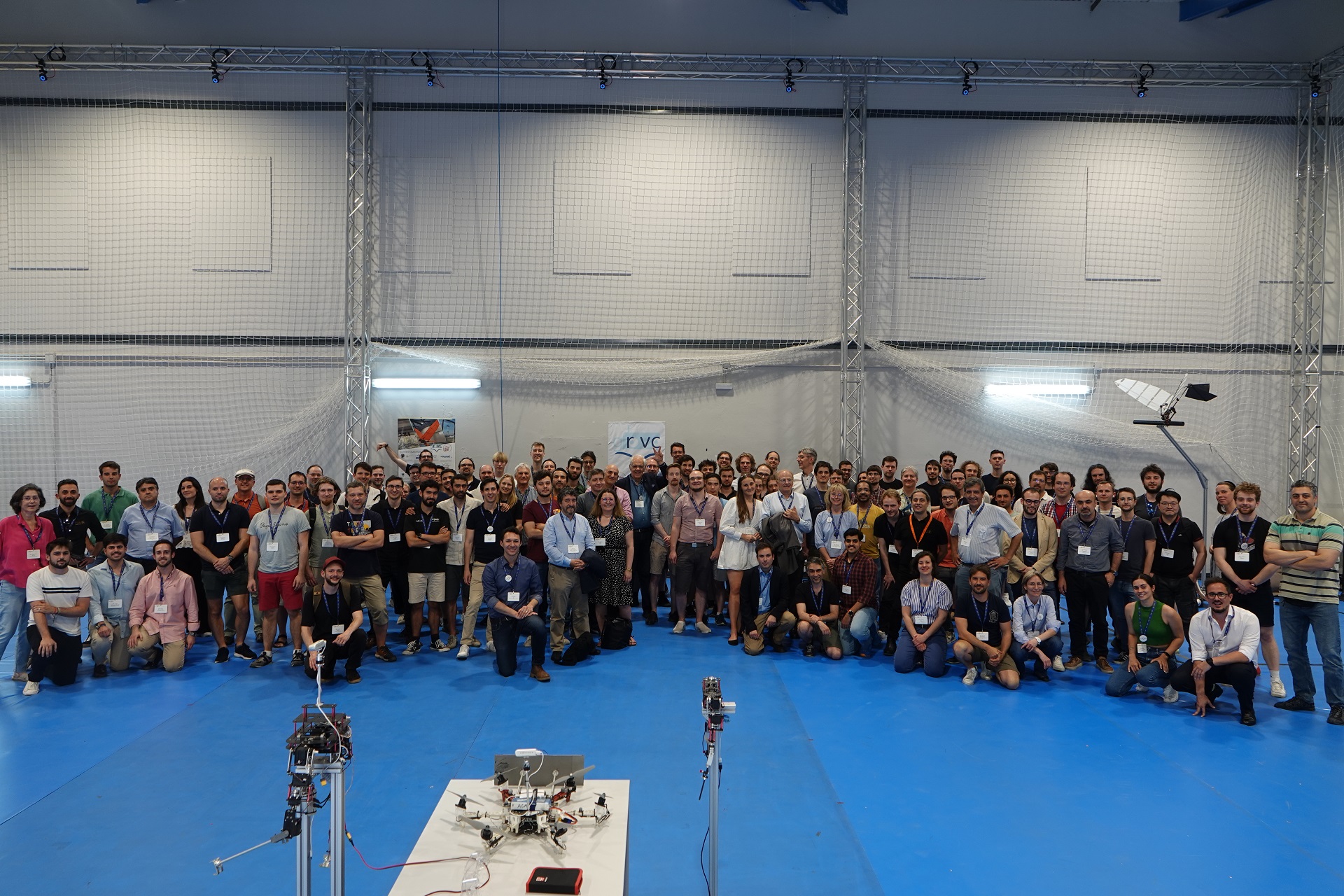
More than 120 European researchers meet at the euROBIN Event 2023
The GRVC of the US is hosting these days a network of excellence in robotics in which experts from 14 different countries meet to share their advances
The Robotics, Vision and Control Group (GRVC) of the Higher Technical School of Engineering of the University of Seville hosted the euROBIN Event 2023 from May 15 to 19, an initiative to bring together the members of this project and share the progress made during the past year by the more than 20 research groups that make it up and among which is the GRVC itself.
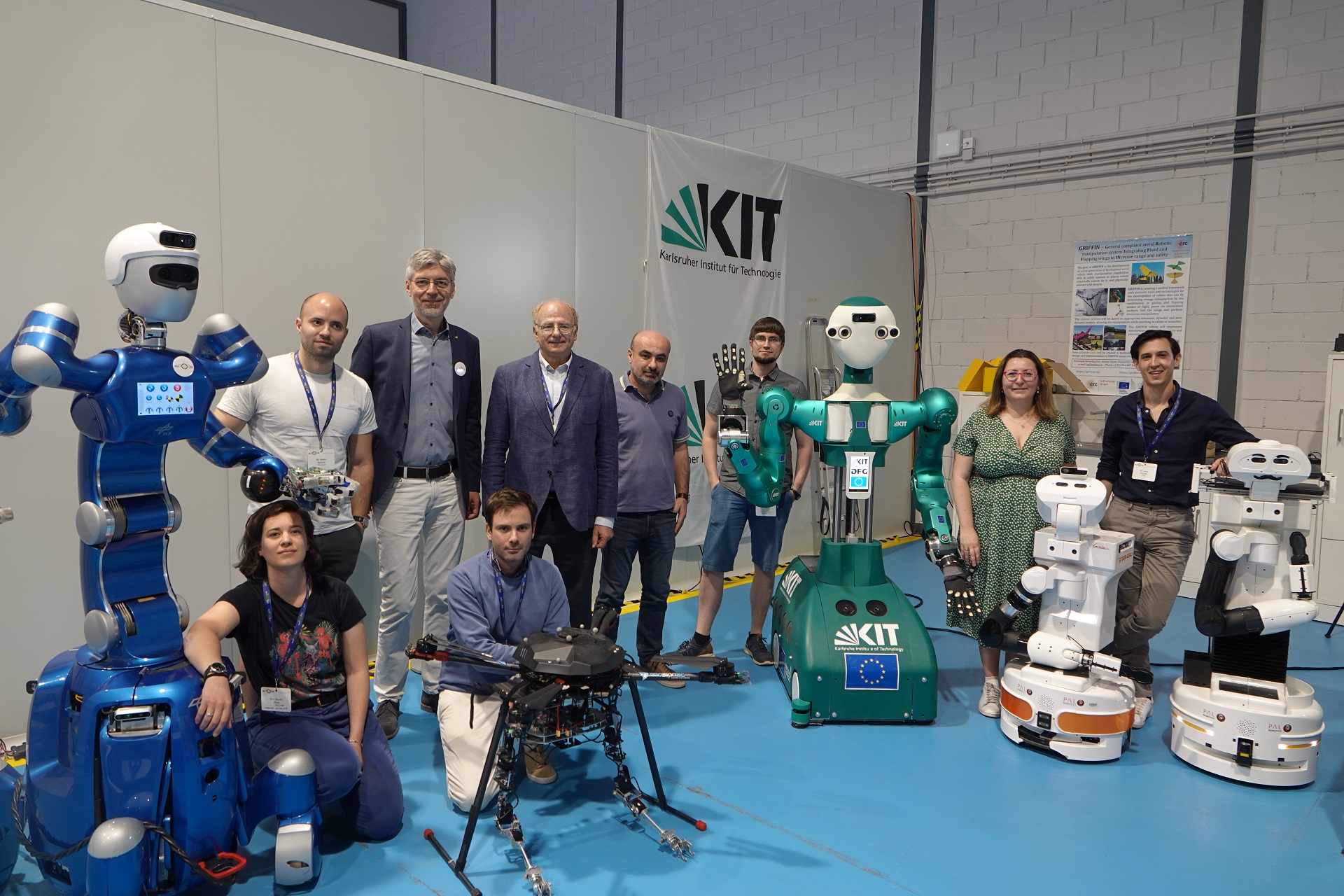
In addition to top-level researchers, the event showcased cutting-edge scientific advancements and state-of-the-art robots. From multirotors to ornithopters, and including humanoids and quadrupeds, these inventions can lift heavy loads or deliver objects directly through a window. Their goal is to make life easier, whether at home or in industry; robots at the service of humans.
The program for this event included a robotics hackathon, held at the GRVC testbed, and various scientific activities, such as keynote lectures and tutorials, which took place at the ETSi. This was an excellent opportunity to share and exchange research results, conduct the first joint experiments in the context of the three application areas (robotic manufacturing, personal robots, and outdoor robots), and propose new ideas and ways to contribute to the development of European robotics. During these days, cultural activities and visits were also organized so that the project experts, from more than 25 European cities, could discover Seville and all it has to offer.
This event has been coordinated by the GRVC and its director, Aníbal Ollero Baturone, professor and, currently, the researcher with the most publications related to unmanned aerial vehicles and aerial robotics worldwide, has had the collaboration of other top experts such as Alin Albu-Schäffer, from the Institute of Robotics and Mechatronics at the German Aerospace Center (DLR), or Bruno Siciliano, Coordinator of the PRISMA Laboratory in the Department of Electrical Engineering and Information Technologies, among others, and has already received numerous congratulations from the European Council for the results it has yielded.
About euroBIN
The euROBIN project was born with the ambition of creating an open and highly active network structure for some of Europe's leading robotics laboratories and achieving a profound scientific and technological impact based on AI. Its main purpose is to create a European ecosystem of robots that share their data and knowledge and are capable, based on their diversity, of learning together to perform an infinite variety of tasks in human environments.
The basic elements that enable intense and prolific collaboration within the euROBIN network of excellence are cooperative competitions and hackathons, transferable and cognition-based embedded AI, the EuroCore European robotics repository, annual scientific workshops and science-industry dialogue, and the Brain Magnet program for young researchers and scientific fellows, among others.
Its members include more than twenty research groups and entities from across Europe, such as the Robotics, Vision and Control Group (GRVC) of the University of Seville, the German Aerospace Center (DLR), the Karlsruhe Institute of Technology (KIT), the National Institute for Research in Digital Science and Technology of France (Inria), the French Alternative Energies and Atomic Energy Commission (CEA), the Danish Technological Institute, the Czech Technical University (CTU), the Consorzio di Ricerca per L'energia L'automazione e le Tecnologiedell'elettromagnetismo (CREATE), Imec, the Royal Institute of Technology (KTH), the Institute of Intelligent Systems and Robotics (ISRI), Örebro University, the French National Centre for Scientific Research, the Association of the Instituto Superior Técnico for Research and Development (IST-ID), the Technical University of Munich, DHL Express, Siemens, and the Volkswagen Group, among others. Embedded, transferable, and cognitively based Artificial Intelligence is the primary focus of the euROBIN research program and the resulting network of excellence. From a scientific perspective, euROBIN will adopt a novel and integrated approach to designing the future ecosystem of heterogeneous intelligent machines interacting with humans. Therefore, euROBIN will make substantial progress in four key scientific areas: InterAct, learning transfer, transferable knowledge, and human-centered transfer.