The University of Seville and EVO launch the New Generation Mobility Chair
With this shared vision, EVO and the University of Seville have ratified today the launch of a New Generation Mobility Chair, an initiative aimed at promoting research, training and knowledge transfer around the major challenges that will shape the future of transport and logistics.
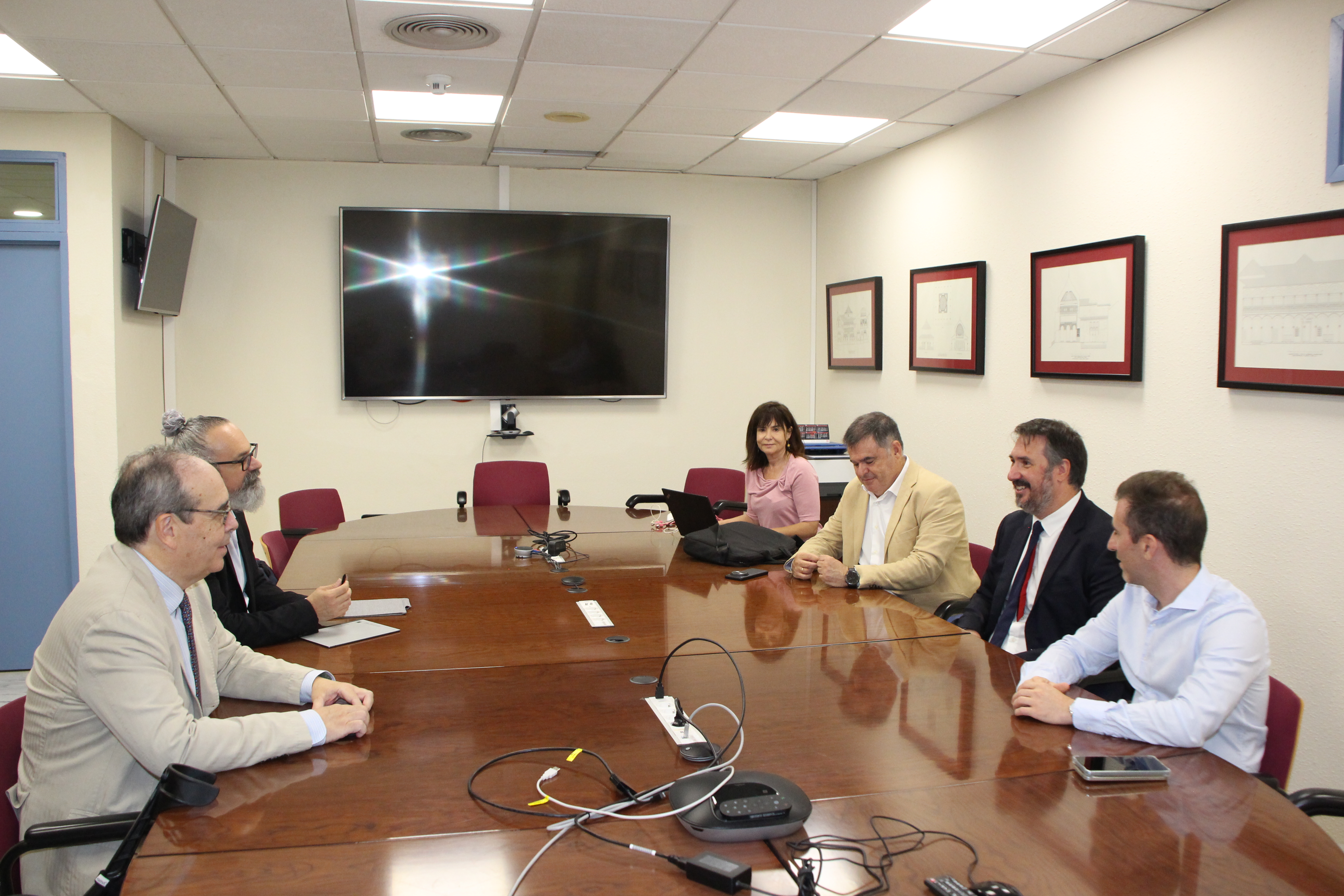
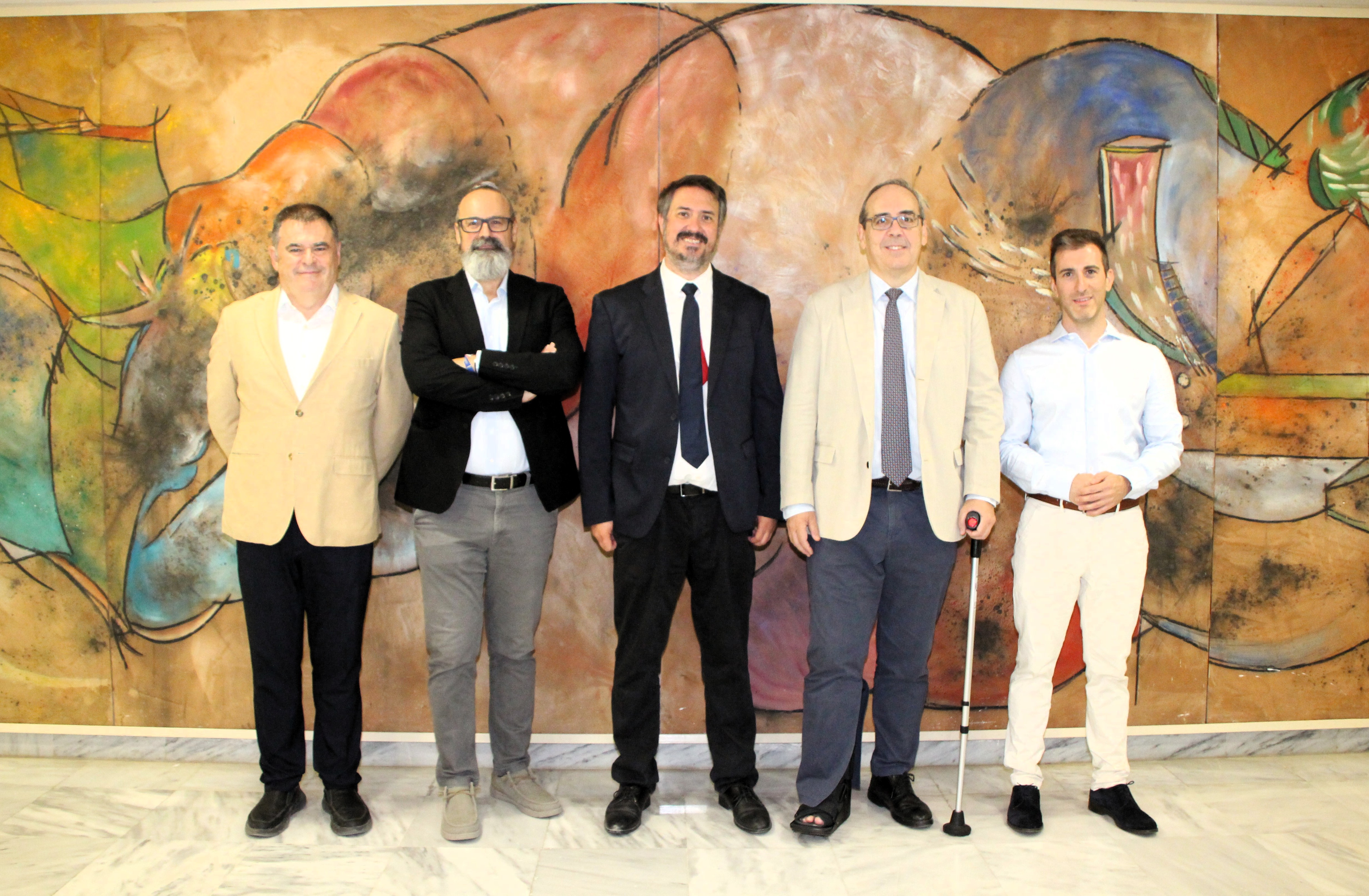
At the inauguration ceremony for the Chair, held at the Higher Technical School of Engineering of the University of Seville, the following individuals were present from the University of Seville: Andrés Sáez, Director of the Higher Technical School of Engineering; Ramón González Carvajal, Director General of Knowledge Transfer; and Ángel Trigo, Director of the Secretariat for Knowledge Transfer and Entrepreneurship. Representing EVO were José Juan Mellado Troncoso, CEO of EVO and a graduate of the Higher Technical School of Engineering of the University of Seville; Alberto Pérez, Director of Research and Development (R&D) at EVO; and Silvia Oñate, Director of Communications at EVO.
The Chair was established to create a stable space for collaboration between academia and the business sector, fostering the development of R&D projects, training activities, scientific dissemination, and new lines of innovation in areas such as hydrogen, electrification, digitalization, artificial intelligence, smart mobility, and technologies applied to industry. Its fundamental objective is to promote interdisciplinary teaching and research activities related to next-generation mobility, studying the current state, challenges, and prospects for developing new strategies, technologies, and innovative solutions in this field, with a particular focus on the design of electric and fuel cell vehicles, advanced energy management, intelligent thermal management in vehicles, power electronics, artificial intelligence, digital twins, advanced connectivity, and smart manufacturing.
The collaboration agreement for the Chair has been signed by the Rector of the University of Seville, Carmen Vargas Macías, and by the General Director of EVO, José Mellado. Today, the inauguration ceremony of the Chair and the first management committee of the same will be held at the Higher Technical School of Engineering of the University of Seville.
This initiative falls within the commitments made under the IPCEI Hy2Move Programme, promoted by the European Commission and approved by several Member States, which allocates over €1.4 billion in public and private funds to boost hydrogen in mobility. EVO participates in this programme with the “AH2HUB” project, whose objective is to design and develop a new generation of hydrogen fuel cell vehicles adapted to high-impact logistics and public transport environments. Specifically, AH2HUB addresses the development of advanced energy architectures, modular propulsion, secure 5G connectivity, digital twins, and artificial intelligence systems applied to fleet performance and management, with direct application to three types of vehicles: a 12-meter bus, an 18-meter articulated bus, and the series production of terminal tractors.
The Seville-based company is working with a progressive industrial scaling strategy, aimed at generating local economic impact, strengthening European value chains, and accelerating the market entry of these technologies. EVO's AH2HUB project has been selected within the framework of the Important Project of Common European Interest (IPCEI) Hy2Move. It is funded by the European Union – NextGenerationEU, under the Recovery, Transformation and Resilience Plan, through the Ministry for Ecological Transition and the Demographic Challenge and the Institute for Energy Diversification and Saving (IDAE).
In this context, the Chair represents for EVO a firm and joint step in the commitment to open innovation and with the creation of a public-private collaboration ecosystem where university, company and institutions work in a coordinated manner to accelerate the transition towards a more efficient, connected and sustainable mobility.
During the inauguration ceremony of the New Generation Mobility Chair, both parties initiated the planned program, which includes joint R&D activities through postgraduate and specialization courses for students and professionals, and the organization of meeting forums, technical conferences, research projects, training programs, final degree and master's theses, and doctoral dissertations, consolidating a meeting point for the exchange of knowledge and the development of new capabilities.
In particular, the Chair will promote sound academic work related to the design and development of electric, battery and fuel cell vehicles; innovative energy storage, generation and management solutions; advanced thermal management solutions for components; innovative high energy efficiency solutions; power electronics; control algorithms based on artificial intelligence; digital twins applied to vehicles and fleets; IoT/5G ECUs; Industry 4.0 applied to advanced manufacturing; and disruptive solutions for mobility in any field of application.
During the event held today, José Mellado stated that "at EVO, we believe that technological leadership is built by sharing knowledge, generating opportunities for talent, and creating environments where research can become solutions with real impact.".
For its part, the University of Seville, a leader in research and innovation, has stated that it “will contribute its scientific capacity and experience in training highly qualified professionals to respond, based on knowledge, to the present and future needs of a constantly evolving sector, such as mobility, where next-generation mobility will demand new technologies, new infrastructures, and new energy models. But above all, it will need people prepared to imagine, design, and bring this transformation to fruition.”.
With this Chair, EVO and the University of Seville are taking a joint step to build that future based on knowledge, collaboration and innovation.