
The FyCUS team from the University of Seville triumphs in the NASA Space Apps Challenge Hackathon
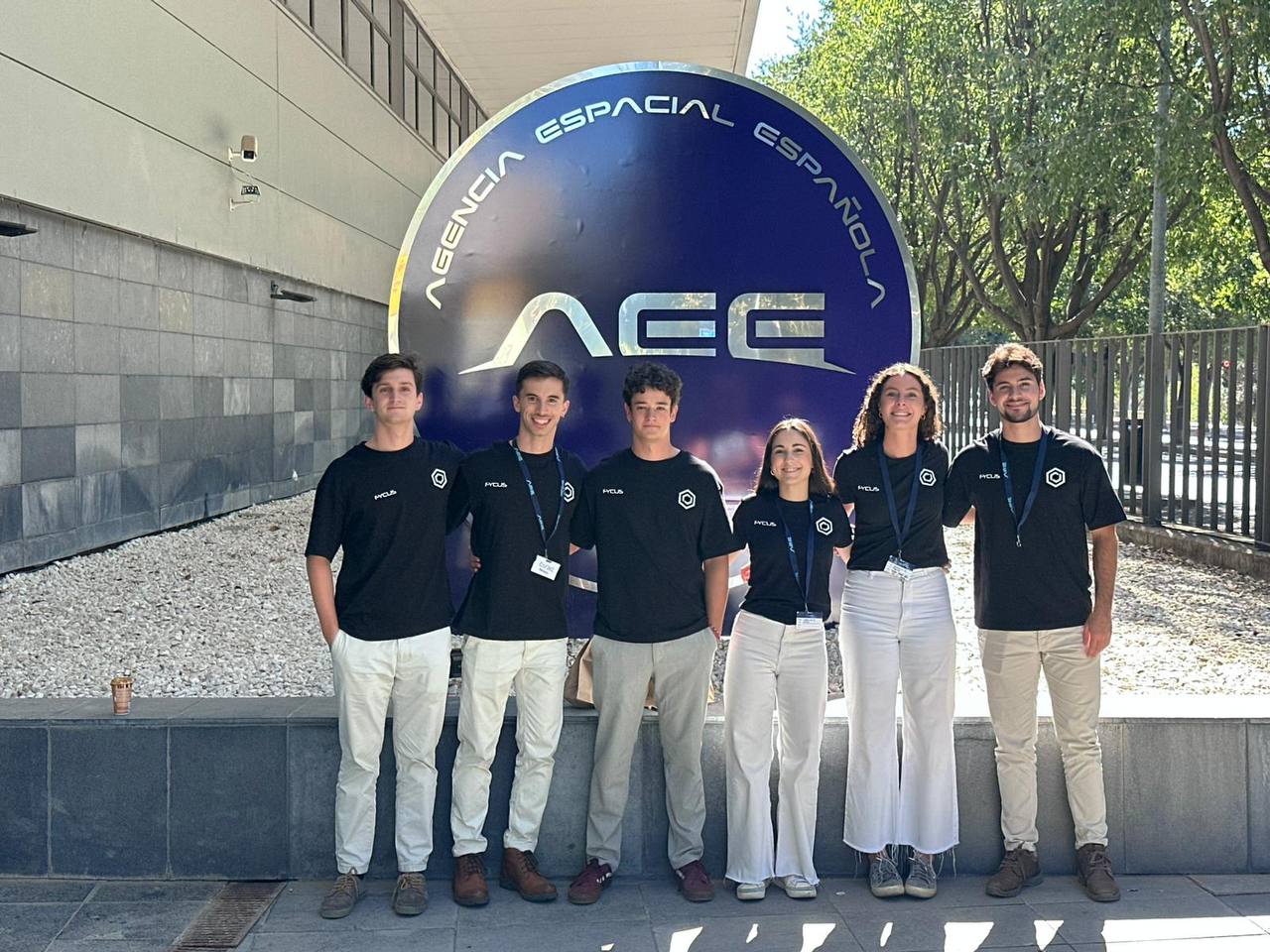
The FyCUS team from the University of Seville triumphs in the NASA Space Apps Challenge Hackathon
Students from the University of Seville, from the FyCUS team, win the local competition of the NASA Space Apps Challenge world hackathon.
The multidisciplinary FyCUS team from the University of Seville has won in Seville, home of the Spanish Space Agency, with an innovative project based on open data from NASA.
A team of six brilliant students from the University of Seville, representing the space technology association FyCUS, has been declared the local winner of the prestigious NASA International Space Apps Challenge, the world's largest STEAM hackathon. The team, composed of Ángela Cuéllar Jiménez, Marta Pavón Núñez, Rafael Pérez Salvatierra, Jorge Mallado, Miquel Pozo Font, and Francisco José Osuna Ruiz, stood out among numerous participants during the intense competition held in Seville from October 3rd to 5th.
The event, which celebrated its third edition in the Andalusian capital, took place in a highly symbolic location: the headquarters of the Spanish Space Agency (AEE). For 48 uninterrupted hours, teams from across the region tackled real-world challenges set by NASA scientists and engineers, aiming to develop innovative solutions using the vast open data repositories of the US space agency and its international partners.
The winning team is a prime example of the collaboration and academic excellence fostered at the University of Seville, comprised of four students from the Higher Technical School of Engineering (ETSi) and two from the Higher Polytechnic School (EPS). This synergy of knowledge and skills was key to developing a project that impressed the expert jury with its creativity, technical rigor, and potential impact.
The project, titled FENyX, addresses NASA's challenge of designing recycling systems for missions to Mars. The proposed solution consists of an additive biofabrication process to produce heat-resistant insulating materials using resources in situ (ISRU): polymeric waste from the mission, Martian regolith, and specialized microorganisms. Using a biotechnological approach, the team developed a system that transforms the waste into essential building materials for future habitats on Mars.
This triumph is not an isolated event, but rather the result of the students' talent and the strong support ecosystem that surrounds them. The team participated representing FyCUS, a space technology laboratory made up of students from the University of Seville. The FyCUS association carries out its activities under the auspices and protection of the Higher Technical School of Engineering (ETSi), whose support has been fundamental and indispensable to its consolidation and success.
"It has been an incredibly intense and rewarding experience. Having the opportunity to work with real NASA data to solve a problem of global scope is a dream for any engineering student. This award is the result of teamwork, a passion for space, and long nights of programming. We are very proud of what we have achieved together," commented the team spokesperson.
For his part, Sergio Esteban, Deputy Director of Innovation at ETSi, highlights the “immense pride that the institution feels for The achievement of Ángela, Marta, Rafael, Jorge, Miquel, and Francisco José is truly remarkable. Their victory in such a competitive arena as the NASA Space Apps Challenge is a testament to their talent, dedication, and the excellent education we provide. This success would not have been possible without the support structure and innovative environment that the ETSi offers. FyCUS is a shining example of what our students can achieve, and we are deeply grateful to them for representing the University of Seville with such distinction. This accomplishment reaffirms our commitment to continue promoting initiatives that prepare the engineers of the future.
As local winners, the FyCUS team advances to the next phase of the competition, where their project will be evaluated by a global jury from NASA alongside the winners of hundreds of events around the world, with the possibility of winning one of ten prestigious global awards.
About FyCUS:
FyCUS (Fulfill Your Cosmos US) is a student association at the University of Seville dedicated to the design, construction, and operation of satellites and other space technologies. Its mission is to provide students with hands-on, multidisciplinary experience, fostering innovation and contributing to space research. The association operates thanks to the essential support of the Higher Technical School of Engineering (ETSi) at the University of Seville.
Web: https://fycus.space | https://etsi.us.es
About the NASA International Space Apps Challenge:
The NASA International Space Apps Challenge is a global hackathon held over 48 hours in cities around the world. It's a NASA initiative that brings together programmers, scientists, designers, storytellers, creators, and technologists to use open data from NASA and its 14 partner space agencies to solve challenges facing humanity on Earth and in space.


