
The winner of the ETSI Quarterly Scientific Article Award has been announced: “October-December 2021”
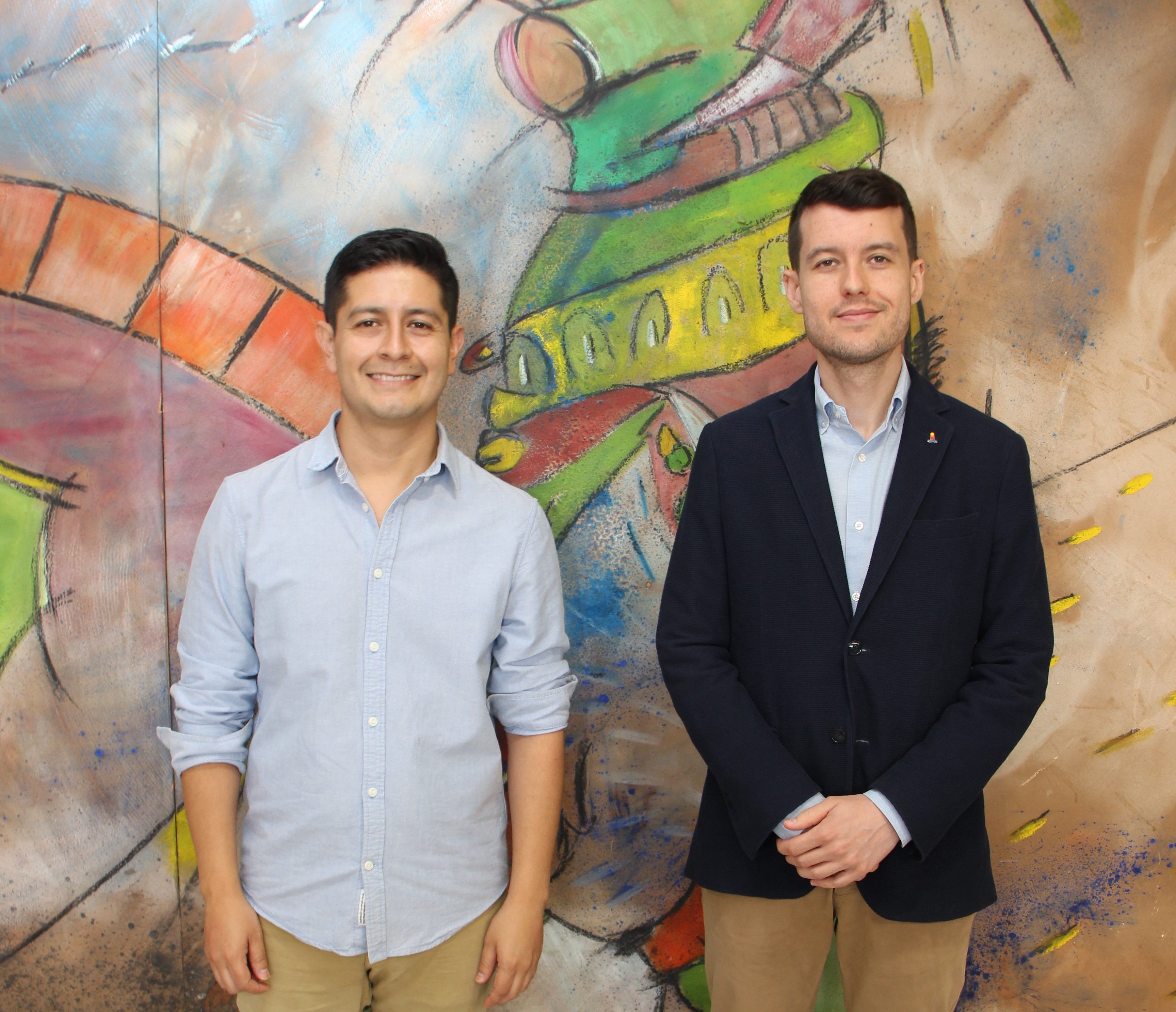
The Jury of the Scientific Article of the Quarter Award of the Higher Technical School of Engineering, recognizing the high quality of all the publications submitted, and after due deliberation taking into account criteria based on various bibliometric indicators, has unanimously decided to award the Scientific Article of the Quarter Award of the ETSI: October-December 2021, to the following work: “Techno-economic and operational assessment of concentrated solar power plants with a dual supporting system”, Applied Energy, vol. 302, November 2021, authored by Raúl Ernesto Gutiérrez Álvarez, Pedro García Haro, and Alberto Gómez Barea. DOI 10.1016/j.apenergy.2021.117600
Although concentrated solar thermal (CSP) power plants are commercially available technologies, their large-scale deployment has been limited in recent years due to high investment costs and greater complexity compared to other technologies. However, the role these systems can play as dispatchable renewable electricity providers could be crucial for the decarbonization of future power grids. The ancillary services that dispatchable renewable energy plants can deliver to the electricity system are expected to encourage greater participation of intermittent, lower-cost renewable technologies such as solar photovoltaics and wind power.
Due to their capacity to utilize thermal energy storage (TES) systems, concentrated solar power (CSP) plants can generate electricity after sunset, eliminating the need to operate combined-cycle natural gas plants for a few hours. However, to operate as baseload power plants, CSP plants require backup systems in addition to TES that can be managed while maintaining their renewable nature. In this regard, hybridizing CSP with biomass conversion systems emerges as an interesting alternative to both increase the performance of CSP plants and mitigate the risks associated with consuming large quantities of biomass in bioenergy plants.
Our study presents a detailed analysis of the benefits of integrating a fully renewable dual backup system (based on biomass and thermal energy storage) into concentrated solar power (CSP) plants. The solar resource in Seville and two 50 MWe plants, based on parabolic trough and solar tower technologies, were used as case studies. Both plants incorporate a biomass boiler and operate in a hybrid mode parallel to the power block. Furthermore, seven operating strategies for the biomass boiler were proposed and modeled in combination with five capacity levels for the thermal storage system (ranging from 0 to 20 hours). Finally, the Analytic Hierarchy Process (AHP) methodology was used as a multi-criteria decision-making tool to comparatively evaluate the technical, economic, and operational performance of all proposed scenarios.
The results show that the inclusion of backup biomass enhances the system's operation as a baseload plant, increasing the capacity factor (CF) by up to 71%, net electrical efficiency by up to 10%, and reducing generation costs by up to 56%, compared to stand-alone CSP plants. For the solar resource considered (Seville), reasonable generation costs (USD 0.153/kWh) can be achieved through a balanced compensation between biomass and TES, while simultaneously ensuring a firm energy supply (CF ≥ 80%) and reducing the flexibility required from the boiler. The inclusion of large TES capacities halves the annual biomass demand and accentuates the seasonal complementarity between solar and biomass resources. Finally, CSP plants with a dual backup system represent a promising option for locations where solar and biomass resources have moderate availability.
This award is funded through a Grant for Scientific Dissemination Activities of the VII Research and Transfer Plan of the University of Seville.


