
Civil Engineering students visit the construction site of the Centenary Bridge in Seville
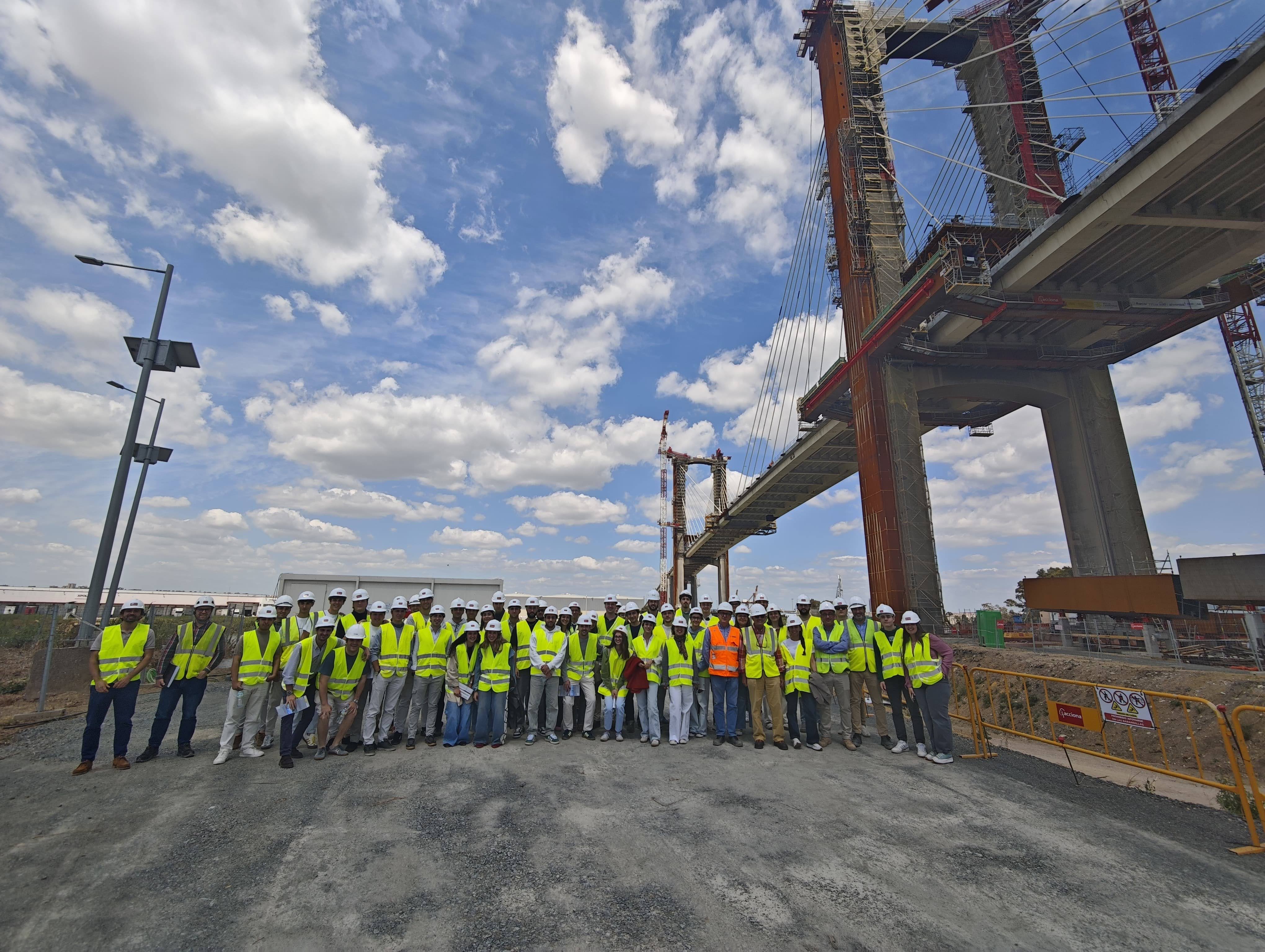
Civil Engineering students visit the construction site of the Centenary Bridge in Seville
Students from the Bachelor's Degree in Civil Engineering and the Master's Degree in Civil Engineering, Canals and Ports of the University of Seville made a technical visit last Monday to the expansion works of the Centenario Bridge, one of the key infrastructures in the metropolitan area of the city.
The activity, organized for academic purposes, included the participation of students from the courses “General Construction Procedures” (3rd year of the Bachelor's Degree) and “Special Construction Procedures” (2nd year of the Master's Degree). They were accompanied by professors Antonio Cerrato and Marcelo Villena. The visit was coordinated by Rafael Pérez Arenas, PhD in Civil Engineering, former director of the works, and professor of both courses until his retirement in 2023.
The Higher Technical School of Engineering (ETSI) financed the bus trip as part of its program to support academic activities.
During the visit, the students received a detailed technical explanation of the construction process and the current status of the work from Pablo Álvarez de Cienfuegos, Head of the Acciona Technical Office for the project, and Óscar Alonso Álvarez, Head of the Technical Assistance Unit for the Construction Management. José Luis Arranz, the construction manager, was also present.
Among the highlights of the visit, the students were able to observe voussoir 0 on the Cádiz side, suspended by heavy-lifting jacks located on pylon 14, which was being welded to the bridge. This voussoir will later be connected by eight cables to the metal extension of the pylon. Once this phase is complete, a lifting gantry with a launching beam will be installed to raise the remaining voussoirs. In addition, the students were able to see several key components of the project firsthand, such as the lifting gantry, the cables already stockpiled in the work area, and the concrete pouring gantry used to construct the side beams.
The visit offered a valuable opportunity for future engineers to learn firsthand about the technical and organizational complexity of a large infrastructure project under construction.


