
The FyCUS team, the only Spanish finalist in the NASA Space Apps Challenge 2025
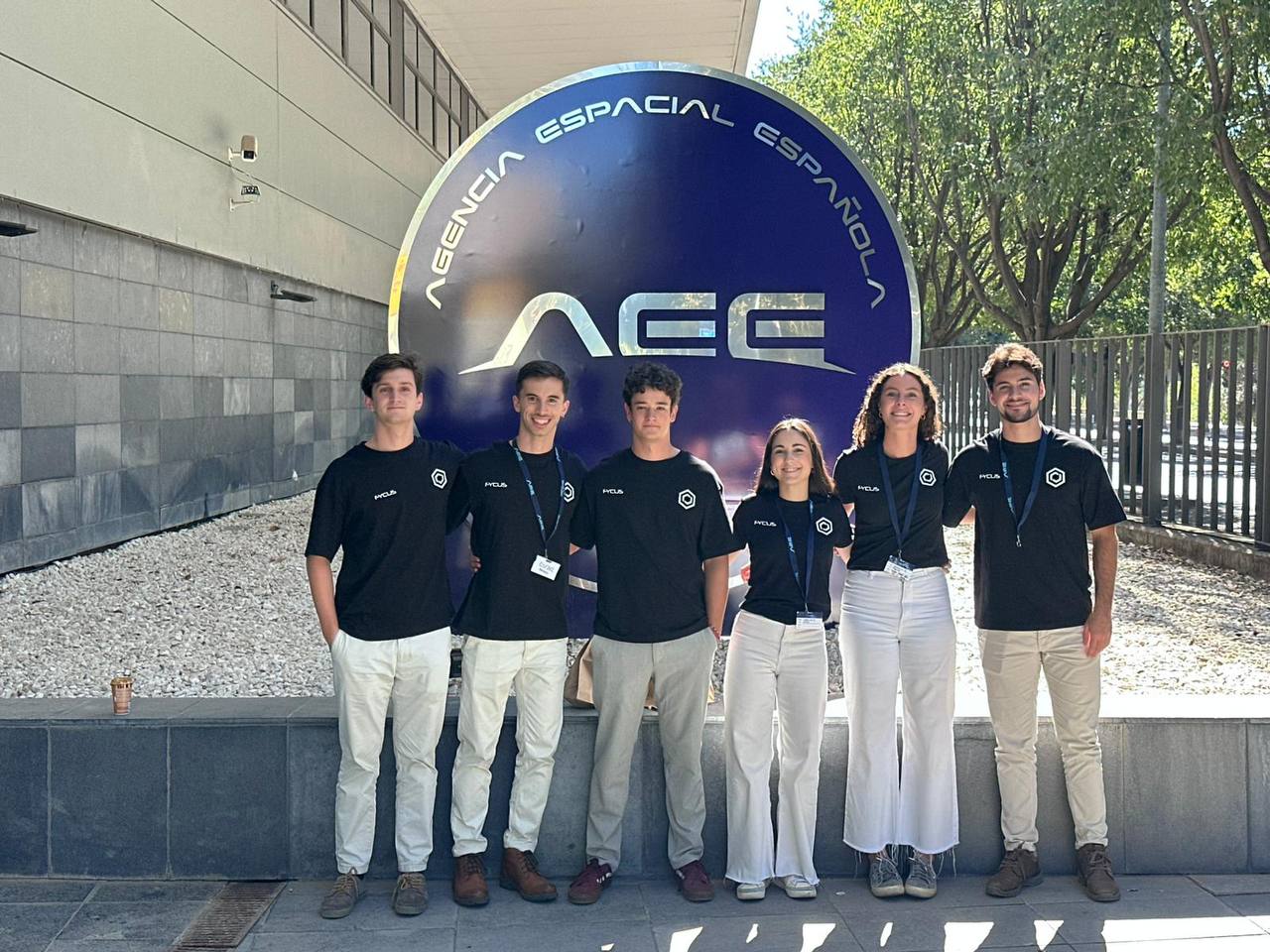
The FyCUS team from the University of Seville is the only Spanish finalist in the NASA Space Apps Challenge 2025
The FyCUS team from the University of Seville has achieved an international benchmark by being selected by NASA as one of the 45 Global Finalists of the NASA International Space Apps Challenge 2025, the largest open innovation competition in the aerospace sector. It thus becomes the only Spanish representative and one of only two European teams to have reached this stage.
The 2025 edition saw record participation figures, with 114,094 registered participants, 551 events in 167 countries, and 11,511 projects submitted. In this context, FyCUS ranks among the world's "Top 45" after passing a rigorous international evaluation process conducted by NASA.
Composed of four students from the Higher Technical School of Engineering (ETSi), where it is based, and two from the Higher Polytechnic School of Engineering (EPS) of the University of Seville (Ángela Cuéllar Jiménez, Marta Pavón Núñez, Rafael Pérez Salvatierra, Jorge Mallado Rodríguez, Miquel Pozo Font and Francisco José Osuna Ruiz), the university association FyCUS promotes space technology projects and the operational application of scientific and engineering knowledge.
After obtaining first place in the local phase organized at the beginning of October at the Seville headquarters of the Spanish Space Agency (AEE), the team has passed different rounds of evaluation to place itself among the most outstanding proposals of the contest.
FENyX: an additive biofabrication system for in-situ recycling on Mars
The finalist project, FENyX, proposes a comprehensive solution for waste management on long-duration missions to Mars. The proposal combines principles of Circular Economy and In Situ Resource Utilization (ISRU), aiming to transform waste materials into essential building resources for the habitability of the Martian environment.
The system develops an additive biofabrication method capable of processing plastic waste generated by the crew, mixing it with Martian regolith, and combining it with specialized microorganisms. The process produces insulating materials with high resistance to radiation and the planet's extreme conditions, with direct applications in the construction and maintenance of future habitation infrastructure.
According to Sergio Esteban, Deputy Director of Innovation at ETSi: "The success of Ángela, Marta, Rafael, Jorge, Miquel, and Francisco José demonstrates the strength of our students' education and their ability to tackle global technological challenges. NASA's selection places their work among the world's best space innovation initiatives and confirms the international reach of the engineering developed at the University of Seville."


