Aquatic drones with artificial intelligence to care for rivers and lakes
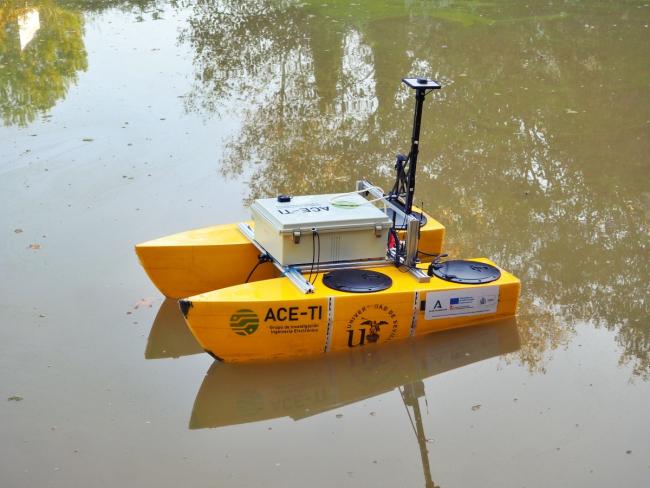
The application of artificial intelligence to environmental protection is already a reality. Researchers from the ACE-TI group (Cybernetic Applications of Electronics for Information Technologies), attached to the Higher Technical School of Engineering at the University of Seville, have recently tested autonomous surface vehicles designed to analyze the state of rivers and lakes without the need for direct human intervention.
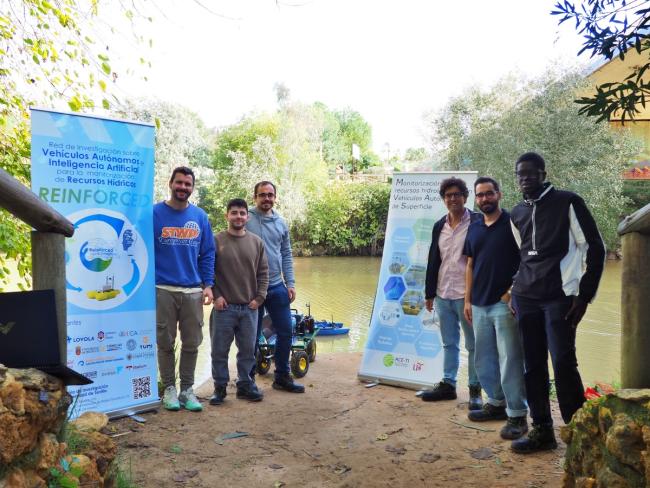
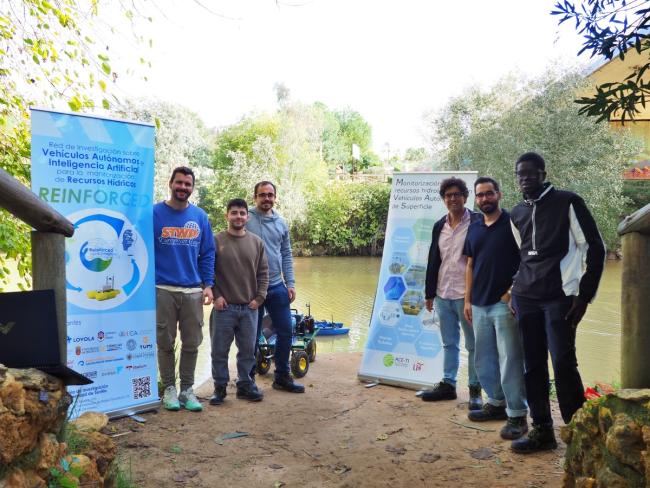
On December 12th, two of these prototypes were deployed on a section of the Guadaíra River, where they autonomously conducted hydrology, bathymetry, and water quality studies. The tests were carried out in collaboration with the Guadalquivir River Basin Authority and the Alcalá de Guadaíra City Council, allowing for the evaluation of the systems' performance in a real river environment, within the framework of the MEDUSA project: Monitoring Environmental Hazards with Autonomous Surface Vehicles, funded by the Regional Government of Andalusia.
Unlike traditional surveys, which require manned vessels and spot sampling, these aquatic drones navigate along routes calculated by artificial intelligence algorithms. These algorithms optimize coverage of the study area and adapt their path based on the environment. This results in more efficient and continuous data collection with less environmental impact, as well as reduced risks and operating costs.
During the missions, the vehicles collected data on key water quality parameters, such as conductivity, turbidity, pH, and temperature, and automatically generated comprehensive AI-based models. These models provide detailed information on the morphology and distribution of important variables that indicate water quality. The results obtained indicate a good physical and hydrological condition of the analyzed area.
The fleet developed by ACE-TI has also been tested in the main lake of Alamillo Park, with the support of the Regional Ministry of Development and the Seville City Council. This has allowed for the validation of its operation in different types of water bodies and under various operating conditions. In both cases, the data collected confirm the usefulness of these systems as environmental monitoring tools.
This work represents an advance in the field of aquatic robotics applied to conservation, demonstrating that autonomous systems can play a key role in monitoring and studying aquatic ecosystems. The ACE-TI group hopes that these types of drones can be used in the future in reservoirs, river mouths, and other environments of special environmental importance, facilitating more informed, preventative, and sustainable water management.